Uluwatu vs Canggu: Where to Invest in Bali
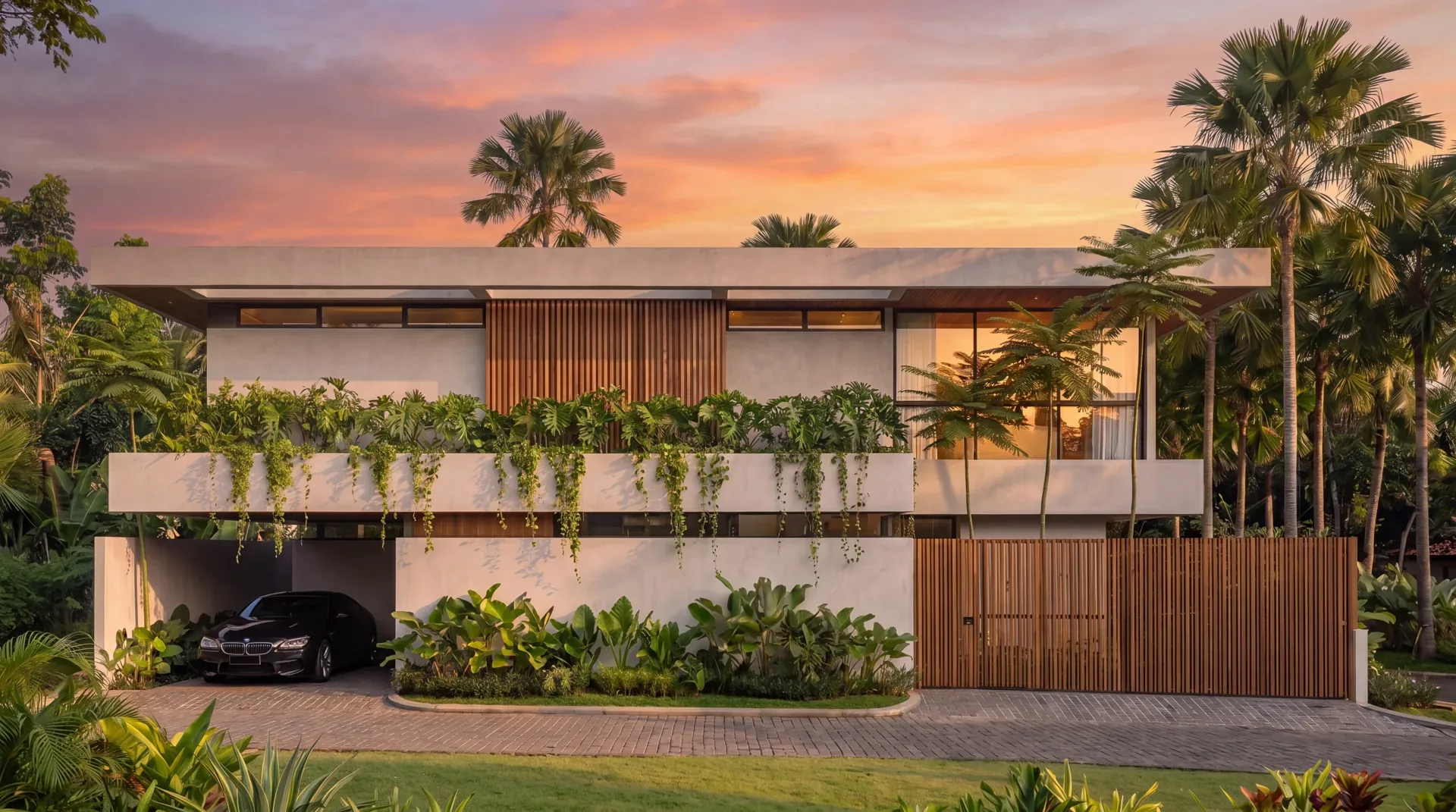
Uluwatu and Canggu are the two names a serious villa buyer in Bali ends up weighing against each other. Both are proven, both draw international visitors, and both have made owners money. But they are different markets with different mechanics, and the choice between them is really a choice about what kind of land you want to own and what kind of guest you want to host.
This is a plain comparison of Uluwatu versus Canggu for investment, across the five things that actually decide returns: land scarcity, buyer profile, yields, traffic and lifestyle. The central difference runs through all of them, and it comes down to the land.
Two very different markets
Canggu grew out of the rice fields on Bali's south-west coast into the island's busiest lifestyle hub, dense with cafes, surf, co-working and a young international crowd. Uluwatu grew on the cliffs of the Bukit peninsula to the south, a landscape of limestone headlands above the Indian Ocean. The two could hardly be more different to stand in.
That difference is not cosmetic. The shape of the land under each market determines how supply behaves, which buyer each attracts, and how values move over time. Before comparing yields or lifestyle, it is worth being clear that these are two distinct asset types that happen to sit on the same island.
It also means the comparison is not about which area is nicer, a question with no fixed answer, but about which market mechanics suit your goal. A buyer chasing a lively lifestyle and a steady stream of mid-length bookings will read the two differently from a buyer chasing scarce land and durable appreciation. Hold your own objective in mind as you read, because the right answer depends on it.
Land: a cliff you cannot build out versus a plain you can
This is the heart of the comparison. Canggu sits on flat, open coastal land, much of it former rice field. When demand rises there, developers can and do build more, because the land to build on is relatively plentiful. New supply keeps arriving, which is good for choice and tends to temper how fast prices climb.
Uluwatu is the opposite. The developable clifftop land above the ocean is finite, and the view, the thing a buyer is really paying for, cannot be built out. Once a clifftop ridge is developed, there is no second row behind it with the same outlook. Rising demand meets a fixed supply of view, and the price of that view climbs rather than being diluted by new stock.
A cliff view that cannot be built out behaves differently from rice-field sprawl. It is the difference between an asset whose scarcity is structural and one whose supply can expand to meet demand. For an investor focused on appreciation, that distinction is the whole argument.
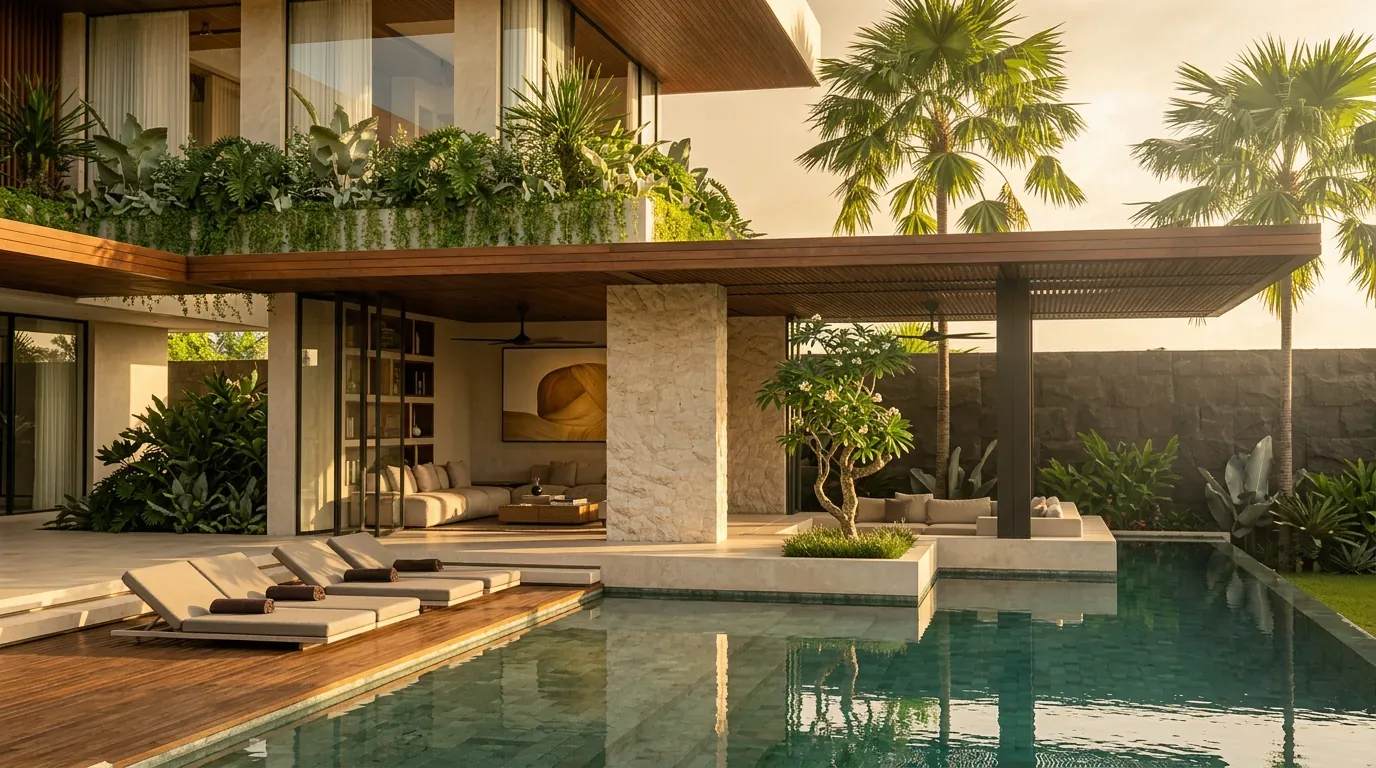
Thinking about Uluwatu? Our team can walk you through availability, pricing and the ownership structure at Ulu Art Bay.
Contact usSign upThe buyer profile
The two markets attract different people, and the buyer profile shapes the rental economics. Canggu skews younger and more transient: digital nomads, long-stay remote workers and a fast-moving cafe and surf crowd. It is a high-energy, high-churn market with a lot of mid-range product and a lot of competition for the same guest.
Uluwatu draws an older, more design-led and higher-spending visitor who comes for the cliffs, the surf and the calm, and who tends to book quality villas for longer stays. The peninsula's audience is international and design-literate, the kind of guest who rents for weeks and pays for architecture. That profile supports higher nightly rates and premium positioning in a way a churn-heavy market does not.
The gap in buyer profile compounds over a holding period. Longer stays mean fewer turnovers, less wear, lower changeover cost and steadier income, while a higher-spending guest tolerates a premium rate and expects the quality that justifies it. A market that rewards doing things properly is a kinder market to an owner who intends to do things properly, which is the kind of owner a serious developer wants to attract.
Yields and occupancy
On paper, both markets can produce strong rental returns, and in a busy stretch Canggu's sheer volume of visitors keeps villas full. The question for an investor is not whether a villa can be busy, but what it earns net, at what rate, and how much competition sits around it.
Canggu's abundant supply cuts both ways. There are plenty of guests, but there are also plenty of villas chasing them, which pressures rates. Uluwatu's constrained supply of quality product, meeting a higher-spending guest, supports stronger rates and premium occupancy for well-run, well-located villas. Across the Ulu Art Bay collections the projected net rental yield is 8 to 11% at 60 to 80% occupancy, modelled on that premium positioning.
The lever in both markets is the same: management and amenity decide whether a villa reaches the top of its range. We break the mechanics down in our guide to Uluwatu villa investment and yields, and the demand picture in Uluwatu's rental demand and tourism.
Traffic and access
Traffic is a real investment variable, because it shapes how easily guests reach a villa and how pleasant a stay is. Canggu's success has brought it dense, slow traffic on roads that were never built for the volume, and congestion is one of the most common complaints about the area. It has not stopped demand, but it affects the day-to-day experience.
Uluwatu is more spread out, and its access has improved markedly: the Bali Mandara Toll Road shortcuts the airport traffic, and the arterial roads down the Bukit have been widened. From Ulu Art Bay the airport is about 40 minutes and Bingin Beach about 5. The peninsula is not free of busy roads, but it trades the constant crush of a dense hub for a more open landscape. We cover this in getting around Uluwatu.
Traffic feeds straight back into yield. A guest who spends an hour crawling to dinner remembers it, and congestion quietly caps how much a dense area can charge before the friction outweighs the appeal. The Bukit's more open geography gives it headroom that a saturated hub does not have, which is one of the less obvious reasons the two markets price differently.
Lifestyle
Lifestyle is where personal preference meets investment logic, because the lifestyle is what the guest is buying. Canggu is urban energy by the beach: cafes, nightlife, co-working, a scene that never quite stops. It suits a guest who wants to be in the middle of things and a buyer who values that buzz.
Uluwatu is the cliffs, the surf and the space. It offers world-class reef breaks a few minutes apart, clifftop beach clubs built for the sunset hour, the temple and the Kecak dance, and a calmer, more design-led rhythm. For the high-spending, longer-staying guest, that is the draw, and it is a lifestyle that a flat, dense hub cannot replicate.
Which lifestyle rents better
Neither is objectively superior, but they rent to different people at different rates. The Bukit's calm, scenery and surf command a premium with the audience that pays the most, which is why the lifestyle case and the investment case point the same way in Uluwatu.
Supply, scarcity and the appreciation case
Step back from the day-to-day and the long-run difference is about supply. Canggu can keep building, so its growth is partly a volume story, more villas, more guests, more competition. Uluwatu cannot keep building clifftop views, so its growth is a scarcity story, a fixed supply of the thing people most want, meeting rising demand.
Scarcity is what drives appreciation that holds. It is the reason Uluwatu is described as one of Bali's strongest-appreciating prime zones, and the reason a finite cliff view tends to outperform expandable plain over time. We make the full argument in why Uluwatu is Bali's fastest-growing luxury market.
This is also why the two markets can both grow and yet reward owners differently. Volume-driven growth lifts the whole area but spreads the gains across an expanding stock of villas. Scarcity-driven growth concentrates the gains on the limited stock that already holds the view. For a buyer thinking in years rather than seasons, which kind of growth you are buying into matters as much as the headline rate.
Tenure: the question that outlasts the view
Whichever market you choose, how you hold the asset matters as much as where it sits. For a foreign buyer the strongest tenure is freehold through HGB, the Right to Build, held via a PT PMA company you control, rather than a shortening leasehold. On scarce, appreciating clifftop land, freehold lets you own the appreciation outright.
This is a reason to look closely at the specific project rather than just the postcode. A finite cliff view held freehold is a fundamentally stronger asset than the same view on a lease that counts down. We explain the structures in freehold versus leasehold in Bali.
The tenure question cuts across both markets, but it bites hardest where the land itself is the prize. In Canggu, where supply can expand, the building is a large part of the value. In Uluwatu, where the view is finite, the land is the value, and owning that land in the strongest available form is the difference between holding an appreciating asset and renting one for a fixed term.
Which one suits you
Choose Canggu if you want urban energy, a younger and more transient guest, and a market where supply keeps the scene fresh and the competition high. It is a proven, busy market, and for the right villa and manager it works.
Choose Uluwatu if you want finite land that cannot be built out, a higher-spending and longer-staying guest, stronger rates for quality product, and the appreciation case that scarcity brings. For an investor focused on durable value rather than volume, the Bukit is the more structural bet. The strongest expression of it is Ulu Art Bay, 21 freehold villas on the cliffs, minutes from Bingin, designed by SUKYF and delivered turnkey.
If you want the two compared against your own numbers, or the full model for a specific villa, contact our team, or sign up to follow the project towards completion in 2028.
Frequently asked questions
Is Uluwatu or Canggu better for investment?
They are different markets. Canggu offers volume, energy and a younger, more transient guest, with supply that keeps expanding. Uluwatu offers finite clifftop land, a higher-spending and longer-staying guest, and a stronger appreciation case built on scarcity. For durable value, Uluwatu's structural advantages are harder to replicate.
Why does a cliff view appreciate more than Canggu land?
Because it cannot be built out. Canggu sits on flat, expandable coastal plain, so rising demand invites more supply, which tempers prices. The Uluwatu clifftop is finite, so rising demand meets a fixed supply of view and the price of that view climbs.
What rental yield can you expect in Uluwatu versus Canggu?
Both can perform, but Uluwatu's constrained supply of quality villas and higher-spending guest support stronger rates. The Ulu Art Bay collections project a net rental yield of 8 to 11% at 60 to 80% occupancy. Net yield and occupancy, not gross headlines, are what to compare.
Is traffic worse in Canggu or Uluwatu?
Canggu is known for dense, slow traffic on roads built for far less volume. Uluwatu is more spread out and its access has improved, with the toll road shortcutting the airport run and widened arterial roads down the Bukit. From Ulu Art Bay the airport is about 40 minutes.