Freehold vs Leasehold in Bali: What Foreigners Can Actually Own
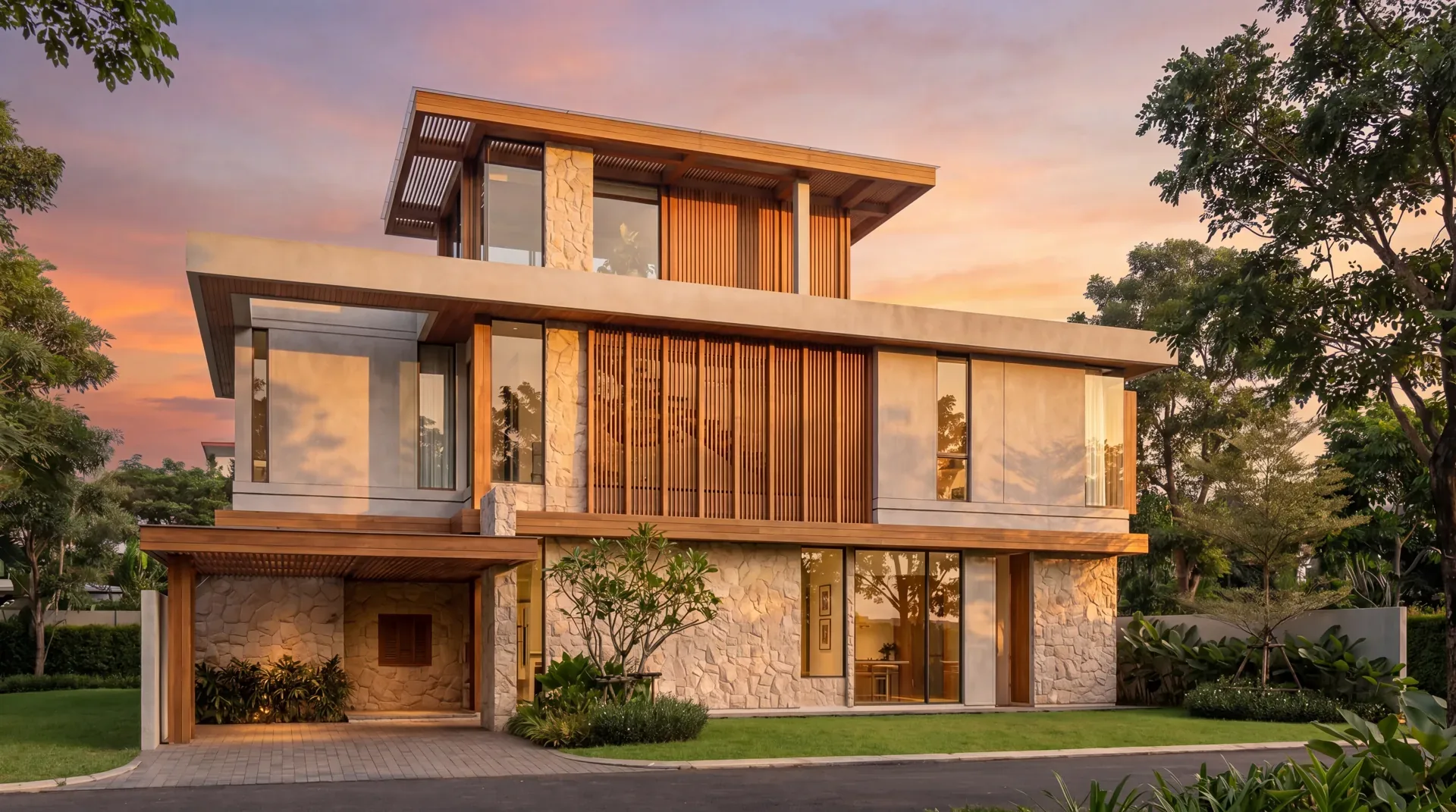
Freehold or leasehold is the first real question every foreign buyer in Bali has to answer, and most of the confusion comes from loose use of the word freehold. In Indonesia the terms have precise legal meanings, and the difference decides how long you hold the asset, whether there is a landlord behind you, what the villa is worth when you sell, and whether you can pass it on.
This guide sets out the two structures plainly, explains the title types behind them, Hak Milik, Hak Guna Bangunan and Hak Pakai, works through how value behaves under each, and covers the resale, inheritance, tax and red-flag questions that decide whether a purchase is sound. The distinction matters more in Uluwatu than almost anywhere else on the island, because the supply of genuine freehold clifftop land is so small.
The short version
Leasehold means you rent the land and the villa for a fixed number of years from a private owner, typically 25 or 30, sometimes with an agreed renewal. When the lease ends, the right returns to the landlord unless you renegotiate. We cover the mechanics in detail in the Uluwatu leasehold guide.
Freehold, as the Bali market uses the word for foreign buyers, means you hold the strongest ownership right available to you through a compliant company structure. There is no private landlord behind the title. You own the right directly, you can sell it, transfer it or pass it on, and you control the timeline.
Indonesian land law does not allow a foreign individual to hold the absolute freehold title, Hak Milik, in their own name. So the practical choice for most buyers is between a private leasehold and a company-held freehold-grade title. The rest of this guide explains what sits underneath each, and how they behave once you own them.
The title types, in plain terms
Every discussion of Bali ownership comes back to three titles. Understanding them is most of the battle, because the marketing word freehold can sit on top of very different legal realities.
Hak Milik (freehold title)
Hak Milik is absolute ownership in perpetuity, the top of the Indonesian land hierarchy. It is reserved for Indonesian citizens. A foreigner cannot hold Hak Milik directly, and any arrangement that parks the title in a local person's name on your behalf, a nominee, is treated as void under Indonesian law. A void arrangement gives you no enforceable right at all, so Hak Milik through a nominee is a structure to avoid, not a shortcut to real freehold.
Hak Guna Bangunan (HGB, the Right to Build)
HGB is the right to build on and own a structure on the land. It is the title a foreign-owned Indonesian company can lawfully hold, and it is what the market means when it sells a villa to a foreigner as freehold. HGB runs in renewable cycles rather than in perpetuity: an initial term of up to 30 years, extendable by up to 20, then renewable for a further period of up to 30, a cumulative cycle of up to 80 years, with a statutory priority to apply for a fresh grant after that. We cover HGB in depth in our guide to HGB and Indonesian agrarian law.
Hak Pakai (the Right to Use)
Hak Pakai is a right-to-use title that a foreigner can hold in their own name, provided they hold a valid stay permit. It suits a single home for personal use more than a portfolio or a rental business, and it is less flexible for resale than a company-held HGB. If your plan is one villa you will live in yourself, Hak Pakai is worth discussing with your lawyer. If your plan is an investment you will rent and later sell, HGB through a company is usually the better fit.
Thinking about Uluwatu? Our team can walk you through availability, pricing and the ownership structure at Ulu Art Bay.
Contact usSign upHow freehold actually works for a foreign buyer
The compliant route is simple to describe. You own an Indonesian company, a PT PMA, that you control. Because a PT PMA is an Indonesian legal entity, it can lawfully hold HGB title, registered with the state land agency, the BPN. The villa sits inside the company. You own the company, so you control the asset.
At Ulu Art Bay this is layered for protection and tax efficiency. A Dubai special purpose vehicle that you fully own holds the shares of the Indonesian PT PMA, and the PT PMA holds the land and the building. You own the company, we build the asset. Returns and capital repatriate without restriction, and the ownership is structured and registered by specialist legal partners, ILA Global and Hoot Legal, rather than left to the buyer to assemble. The deeper mechanics sit in our guide to PT PMA structures for property.
The practical takeaway: freehold here is not a loophole, it is a documented corporate structure used by serious developers, with the title registered to a company you own. It is a filing cabinet of registrations and shares, not a handshake.
Why the difference shows up in the price
A leasehold is a wasting asset. Each year that passes shortens the remaining term, and a buyer in year 18 of a 25 year lease is buying seven years of use, which is reflected in what they will pay. Leasehold villas are usually cheaper to enter for that reason, and they can make sense for a buyer with a defined time horizon.
A freehold-grade HGB title does not decay the same way. The holder has a statutory priority to apply for a fresh grant over the same land at the end of a cycle, an administrative process with the land office and a government fee, not a private negotiation with a landlord. That durability is why freehold villas hold value better on resale, and why limited-supply freehold land in Uluwatu has appreciated the way it has.
If you are weighing the two against rental returns, read our breakdown of Uluwatu villa investment and yields.
A worked comparison over ten years
Numbers make the point faster than words. Take two villas of similar size and location, and follow them with a simple illustration rather than any quoted price. Call the starting value of each one 100 units.
The leasehold villa is sold on a 25 year term. Ten years in, its remaining life has fallen from 25 years to 15. A buyer at that point is purchasing 60 percent of the original term, and all else equal will pay roughly in proportion to the years left. The villa has also moved out of the deep part of its resale window, so the pool of buyers is thinner. The owner enjoyed a decade of use and a lower entry cost, but the asset is worth less than it started and heading towards zero.
The freehold HGB villa holds a right that cycles and renews. Over the same decade its value is driven by the market, not by a shortening clock, so in a rising prime zone like Uluwatu it can appreciate rather than decay. At the end it can be sold with its full structural life ahead of it, financed by the next buyer, or passed to an heir. The two villas started at the same 100 units and told opposite stories, and the only variable that changed was the tenure underneath them.
A lease spends down. A freehold HGB title compounds. Same villa, opposite trajectories.
Resale and liquidity
Resale is where tenure stops being theoretical. A freehold HGB villa sells into a broad market, because the buyer inherits a durable, renewable title with a long structural life and the option to finance it. Liquidity is strongest where the asset is strongest, and genuine freehold on finite Uluwatu clifftop land is about as strong as the island offers.
A leasehold sells into a narrower and shrinking market. The remaining term caps what the next buyer will pay and how long they in turn can hold, which compresses demand as the years tick down. A lease is often most liquid in the first half of its term and progressively harder to move after that. If your plan assumes you can exit cleanly whenever you choose, freehold gives you that freedom and leasehold gives you a window.
Inheritance and passing it on
For buyers thinking beyond their own use, succession separates the two structures sharply. A company-held freehold is, in effect, an asset you can pass on by passing on the company. Because the villa sits inside a PT PMA whose shares are held by a Dubai SPV you own, the ownership can be transferred through the corporate layer rather than renegotiated with a landowner. That is cleaner to plan and cleaner to execute, and it is one reason serious investors favour the structure.
A leasehold is harder to bequeath, because what you are passing on is a shortening contract, not an asset with open-ended life. An heir inherits only the years that remain, and any renewal still depends on whatever the original contract secured. Structure the ownership correctly from the start, with proper legal advice, and inheritance becomes a feature of freehold rather than a problem to solve later.
Tax basics to understand before you buy
Tax is specialist territory and you should take advice for your own country, but a few principles help you ask the right questions. A purchase in Indonesia typically attracts an acquisition duty and notary and registration costs at the point of transfer. Rental income earned by the villa is taxable, which is one reason a net yield, after tax and costs, is the only honest figure to compare. On a later sale, the transfer is taxed as well.
Holding through a PT PMA adds a corporate layer with its own accounting and reporting obligations, and the Dubai SPV above it is part of why the structure is built the way it is. At Ulu Art Bay the tax and accounting sit inside the in-house service so an owner is not assembling advisers alone, but the principle holds for any purchase: model the returns after tax, not before, and get the structuring from people who register these titles for a living. Do not take a tax position from a brochure.
Red flags to walk away from
Most buyers who get hurt in Bali were warned by something they chose to ignore. The patterns repeat.
- A villa sold to a foreigner as Hak Milik freehold held through a local nominee. This is void under Indonesian law and leaves you with no enforceable right.
- A leasehold renewal described as guaranteed or automatic but not written as a contractual right at a known price.
- A seller who cannot name who registers the title, or cannot show the HGB and PT PMA structure on paper.
- A quoted yield with no answer on whether it is gross or net, or at what occupancy.
- Land whose zoning does not permit villa use or short-term rental, which can make the whole plan unusable.
- Pressure to pay quickly, in full, before due diligence is complete.
None of these is subtle once you know to look. Run our Bali villa buying process guide alongside this one, and insist the seller answers in documents, not in reassurances.
Which one is right for you
Choose leasehold if you want a lower entry price, you are comfortable with a fixed horizon, and you are buying mainly for personal use over a set number of years. Choose freehold through HGB if you are buying as an investment, you want the asset to hold its value, you want to sell, transfer or inherit it cleanly, and you want control without a landlord in the chain. For most of the investors we work with in Uluwatu, that is the deciding factor.
Whichever way you lean, the quality of the legal structuring matters as much as the label. Ask who registers the title, whether the structure avoids nominee arrangements, and how the company is governed. If you want the freehold model shown for a specific villa at Ulu Art Bay, contact our team, or sign up for the next release.
Frequently asked questions
Can a foreigner own freehold land in Bali?
Not the absolute freehold title, Hak Milik, which is reserved for Indonesian citizens. A foreigner holds freehold-grade ownership through a PT PMA company that holds HGB title. The company is yours, so you control the asset.
Is leasehold a bad idea in Bali?
No. Leasehold is a legitimate structure that suits buyers with a fixed time horizon or a lower entry budget. It is simply a different instrument. The key is understanding that the remaining term drives the value.
What is the difference between HGB and Hak Pakai?
HGB, the Right to Build, is held by a company and suits ownership and rental. Hak Pakai, the Right to Use, can be held by a foreign individual with a stay permit and suits a single home for personal use.
Can I inherit a freehold villa in Bali?
Yes. Because a freehold villa sits inside a PT PMA whose shares are held by a Dubai SPV you own, ownership can pass through the corporate layer. A leasehold passes on only the years remaining in the contract.