The Uluwatu Leasehold Guide: Terms, Renewal and When It Makes Sense
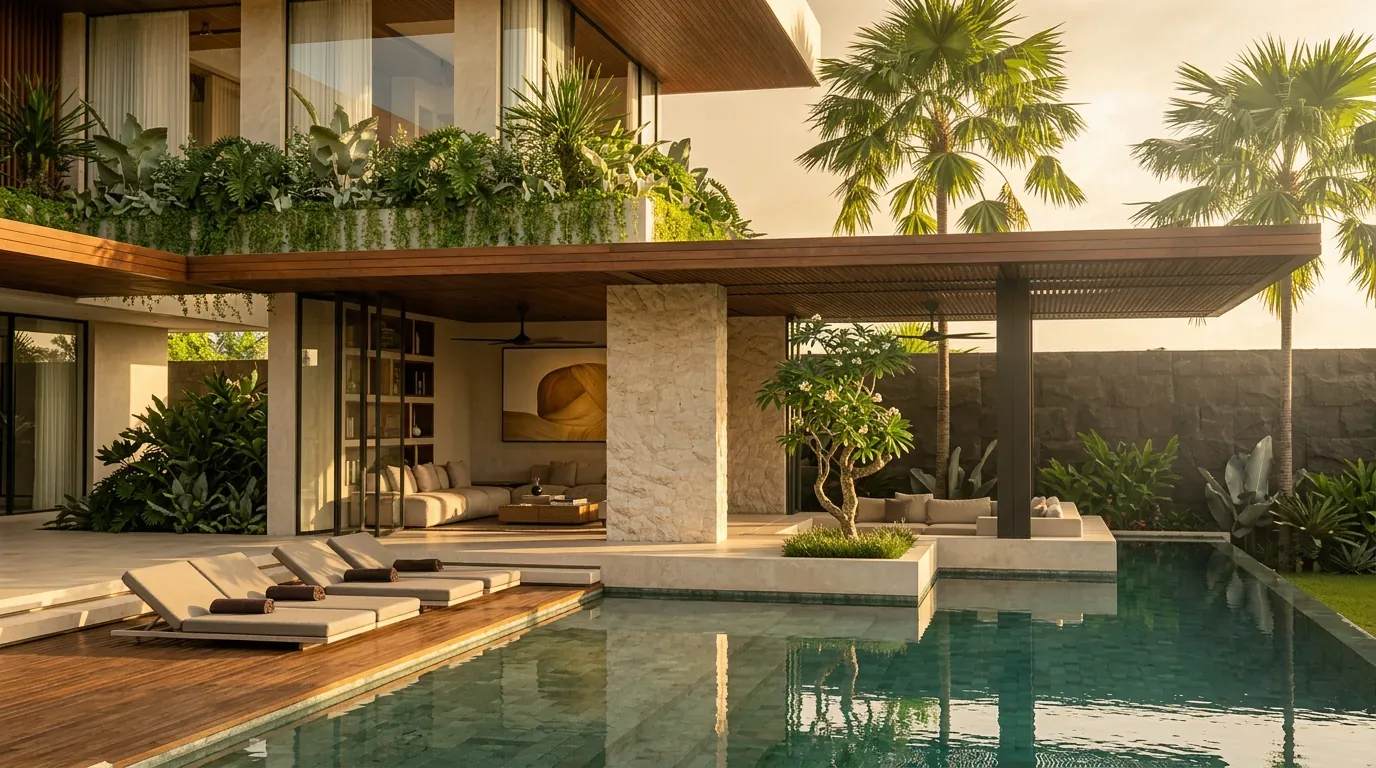
Leasehold is the structure most foreign buyers meet first in Uluwatu, usually because it carries the lowest entry price on the listing. It is a legitimate way to hold a villa, and for the right buyer it is the correct choice. The mistake is treating it as the same thing as ownership. A leasehold is a fixed number of years of use, and the clock starts the day you sign.
This guide explains Uluwatu leasehold in plain terms: what the right actually is, the terms you will see quoted, how renewal works and where it does not, how value decays as the remaining term shortens, and when a lease genuinely suits a buyer. It also sets the structure beside the freehold route used by the Art Villas Bali flagship, so you can weigh the two with clear eyes.
What a leasehold in Uluwatu actually is
A leasehold is a contract. You pay a private landowner an agreed sum for the right to occupy and use a parcel of land, and usually the villa on it, for a set period. The land title stays with the owner. You hold a right of use that lives inside the lease agreement, not a registered ownership right over the land itself. When the term ends, the land and anything fixed to it return to the owner unless you have negotiated otherwise in advance.
This is the first thing to internalise. With a leasehold there is a landlord behind you for the whole life of the arrangement. Your position is only ever as strong as the contract you signed and the goodwill and solvency of the party on the other side of it. That is not a reason to avoid leasehold, but it is the reason the paperwork matters more than the brochure.
In Uluwatu leasehold is common for a simple reason. The developable clifftop land above the Indian Ocean is limited and tightly held, so many owners prefer to lease rather than sell. That keeps the headline price of a leasehold villa well below a comparable freehold one, which is exactly what draws buyers to it.
The terms you will see quoted
Two shapes dominate the market. The first is a single fixed term, often 25 or 30 years, after which the right expires. The second is a split structure written as a first term plus a renewal, for example 25 plus 25 years, where an initial term is paired with a pre-agreed option to extend for a second period on terms set out at the start.
The separate Uluwatu Art Villas project is a useful reference point for the split form. It is a leasehold development of 12 villas on a 25 plus 25 year structure, with delivery in September 2026, and it is nearly sold out. It is a different project from the Art Villas Bali freehold flagship, and we only mention it here to show what a 25 plus 25 lease looks like in practice: an initial 25 year term with a contracted path to a further 25.
Fixed term versus split term
A single fixed term is the cleaner document but the harder exit, because value falls steadily towards zero as the end approaches. A split term softens that by writing the renewal in at the outset, which gives a resale buyer more runway to purchase. The detail that decides whether a split term is worth anything is how the second period is priced and triggered, which we come to below.
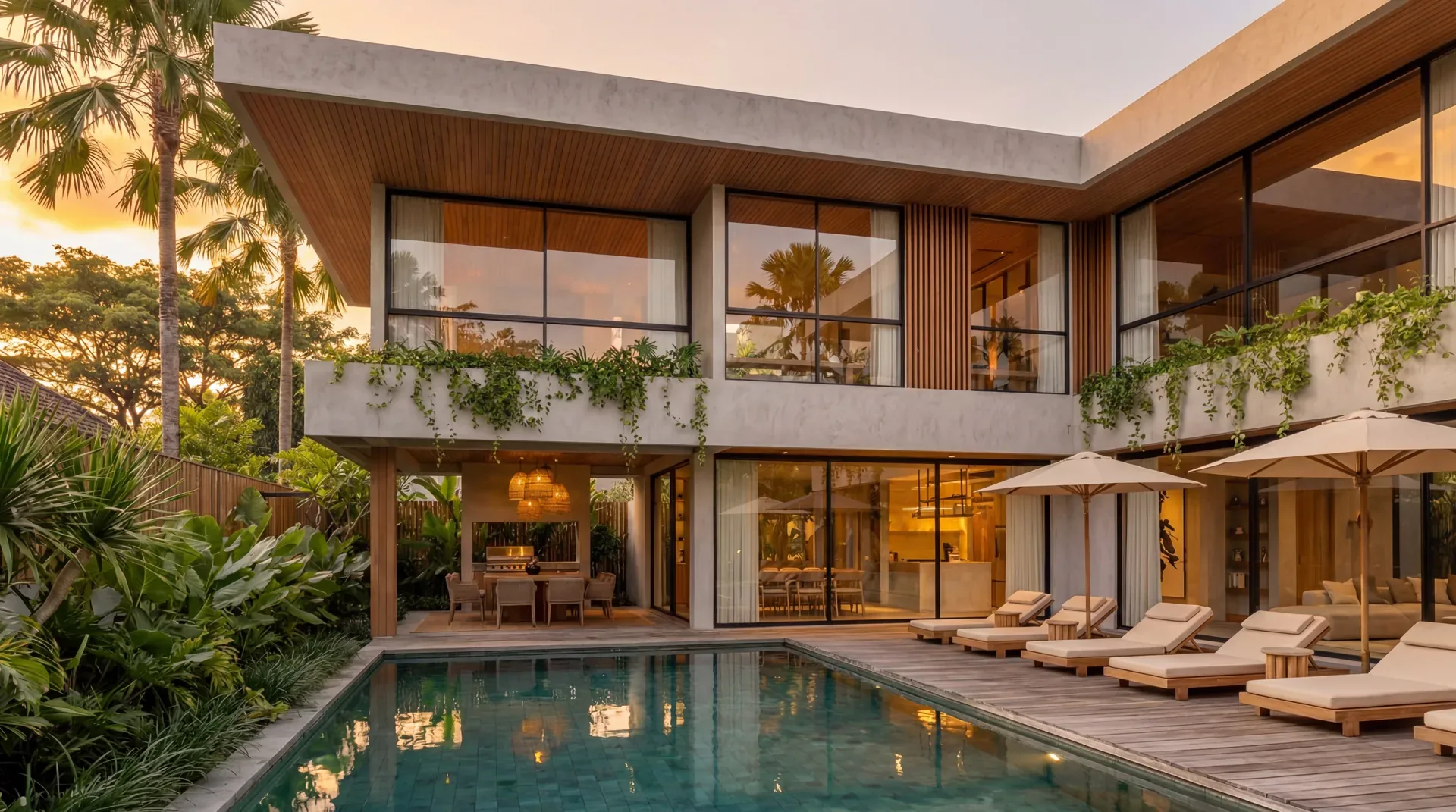
Thinking about Uluwatu? Our team can walk you through availability, pricing and the ownership structure at Ulu Art Bay.
Contact usSign upHow renewal really works
Renewal is where leasehold buyers are most often caught out, because the word covers two very different things. In a split term structure the renewal is a right you already hold, written into the original contract with its price or its pricing formula fixed in advance. In a plain fixed term, renewal is not a right at all. It is a fresh negotiation with the landowner at the end of the term, conducted from the weakest possible position, because by then your alternative is to walk away and leave the villa behind.
A renewal that is merely promised verbally, or described as a formality, is worth very little. The questions that matter are concrete. Is the extension a contractual right or a hope. Is the renewal price a fixed figure, a figure linked to an index, or set at market value at the time. Who signs the extension, and what happens if that person has died, sold the land or fallen into dispute by then. A well drafted split lease answers all of this on the page. A weak one leaves it to a future conversation you will not control.
The honest summary is that leasehold renewal is a contract term, not a property right. That is the structural line that separates it from the freehold route, where the holder has a statutory priority to continue rather than a private counterparty who can say no.
How value decays with the remaining term
A leasehold is a wasting asset. Its value is the value of the years that remain, and every year that passes removes one of them. This is the single most important idea for anyone buying a lease as an investment rather than purely for personal use.
The arithmetic is easy to feel with a simple illustration. Treat a 25 year lease as roughly comparable to buying 25 years of use. A buyer entering in year one holds the full term. A buyer the first owner sells to in year ten is buying 15 years, and a buyer in year eighteen is buying only seven. All else equal, each of those buyers will pay less than the one before, because each receives less. The villa can be beautifully built and perfectly located and still command a lower price every year, simply because the term behind it is shorter. The building does not decay that fast. The lease does.
This decay also shapes your exit window. Resale demand for a lease tends to thin out as the remaining term falls, because mortgage financing, long rental contracts and the next buyer's own resale all need years on the clock to work. Many leasehold owners find the practical selling window is the first half of the term, which means your planning horizon should be shorter than the lease itself.
There is a second cost that rarely appears in the sales conversation. Anything you spend improving a leasehold villa, a new kitchen, a reworked pool, a rebuilt terrace, is spending on an asset whose life is already counting down, and in most leases those improvements revert with the land at expiry. The money you put in buys enjoyment during your term, not lasting equity you can sell. On a freehold title the same spending adds to an asset you keep, which is a quiet but real difference in how capital behaves under each structure over the years.
- Value tracks the remaining years, not the original term, so a long lease bought late behaves like a short one.
- The resale market is deepest early and thins as the end nears.
- A pre-agreed renewal can lengthen the usable life, but only if it is a true contractual right at a known price.
- Improvements you make revert with the land at expiry unless the contract says otherwise.
When a leasehold genuinely suits a buyer
None of this makes leasehold a bad instrument. It makes it a specific one. There are buyers for whom a lease is the right answer, and they tend to share a profile.
You have a defined time horizon. If you know you want a Uluwatu base for a decade or so and are not trying to pass an asset to the next generation, a lease matches the plan without tying up freehold-level capital. You are buying mainly for personal use. A lease over a home you will enjoy yourself, rather than a long rental business, carries less resale risk because you are the one consuming the years. You want the lowest possible entry price. Leasehold is usually the cheapest way onto the Bukit, and for a buyer who values that above durability it does the job.
The buyer leasehold does not suit is the investor who wants the asset to hold and grow its value, to be sold cleanly at any point, to be financed, or to be inherited. For that profile the shortening term works against every goal. If that sounds like you, read our comparison of freehold versus leasehold in Bali before you commit either way.
How leasehold contrasts with the freehold route
The Art Villas Bali flagship, Ulu Art Bay, takes the other road. Its villas are held freehold through HGB, the Right to Build, via a PT PMA company the buyer controls and registers with the state land agency, the BPN. There is no private landlord behind the title. The company holds the right directly, and the holder has a statutory priority to apply for a fresh grant at the end of each cycle rather than a renewal that depends on a landowner's agreement.
That is the structural difference stated simply. A lease ends and the land returns to its owner. An HGB title cycles and renews with the holder's own priority to continue, which is why the market treats it as freehold-grade for foreign buyers. We explain the mechanism in full in our guide to HGB and Indonesian agrarian law, and the structuring in our note on PT PMA structures for property.
A lease rents you a fixed number of years. A freehold HGB title gives you a right your own company holds and renews.
The price gap between the two is real, and it is not a trick. You pay more for freehold because you are buying durability, resale strength and control, not a countdown. Whether that premium is worth it depends entirely on which buyer profile above is yours.
What to check before you sign a lease
If a Uluwatu leasehold is the right fit for you, the quality of the contract is what protects the money. Treat the following as the minimum.
- The exact remaining term, in writing, and the precise expiry date. Buy the years, not the headline.
- Whether any renewal is a contractual right with a fixed or formula price, or merely a promise to negotiate later.
- Who legally owns the land, verified at the land office, and whether they have the clean right to lease it to you.
- What reverts to the owner at expiry, including the villa and any improvements you fund.
- Whether the land is correctly zoned for villa use and short-term rental, so the lease is usable for its purpose.
- Any charges, encumbrances or existing leases sitting over the same parcel.
This is the same discipline any serious purchase deserves, and it is worth reading our wider Bali villa buying process guide alongside this one. A seller who cannot answer these questions on paper is telling you something.
Making the decision
Leasehold in Uluwatu is a clear, legitimate structure with one defining feature: it is a fixed term of use that shortens every year. For a buyer with a set horizon, a personal-use mindset and a preference for the lowest entry price, it can be exactly right. For a buyer who wants an asset that holds value, sells cleanly and passes on, the shortening term is the wrong shape, and freehold through HGB is the structure to study instead.
Either way, decide from the structure, not the sticker price. If you want the freehold model walked through for a specific villa at Ulu Art Bay, contact our team, or sign up to receive the next release and the full figures.
Frequently asked questions
What does leasehold mean in Uluwatu?
It means you hold a contractual right to use a villa and its land for a fixed number of years, often 25 or 30, after which the right returns to the private landowner. You do not own the land title itself, you own the years in the lease.
How long are Uluwatu leases, and can they be renewed?
Common forms are a single 25 or 30 year term, or a split structure such as 25 plus 25 with a pre-agreed extension. Renewal only counts if it is a contractual right at a known price. A verbal promise to negotiate later carries little weight.
Why does a leasehold villa lose value over time?
A lease is a wasting asset. Its value reflects the years remaining, so it falls as the term shortens. A buyer in year eighteen of a 25 year lease is buying only seven years of use, and pays accordingly.
Is leasehold or freehold better in Uluwatu?
Leasehold suits a lower entry price and a fixed personal-use horizon. Freehold through HGB suits an investor who wants durable value, clean resale and inheritance. Ulu Art Bay uses the freehold HGB route for that reason.