
The New Bali Freehold Market: How Foreign Buyers Are Finally Owning, Not Just Renting

For most of the last decade, buying property in Bali meant one of two things. You took a leasehold, a fixed number of years of use that slowly ran down, or you went quiet and put the land in an Indonesian person's name and hoped the arrangement held. Neither felt like ownership. Both left foreign buyers treating Bali as a holiday they paid for in advance, rather than an asset they genuinely held.
That is changing, and the change is the real story. A proper freehold market is now taking shape for foreign buyers, especially in Uluwatu, built on a compliant and widely recognised structure rather than a workaround. This article is about that market, why it is effectively new, and what it means for value, resale and the way you buy. It is not another explainer of the legal mechanics. Where you want the detail, we link the deep dives.
What buyers actually mean by "freehold", and why the question matters
When a foreign buyer asks whether a villa is freehold, they are rarely asking a technical land-law question. They are asking something simpler. Do I own this, or am I renting it with extra steps? Can I sell it when I choose, pass it on, and know the ground under the building is mine for the long term rather than a clock counting down to zero?
That instinct is sound, because the answer shapes everything that follows: how the asset holds value, how easily it resells, and how comfortably you sleep at night. The confusion is that Indonesia does not hand foreigners the exact title an Indonesian citizen can hold. So for years the honest answer was "not really", and buyers settled for leasehold or took risks they did not fully understand.
The useful development is that there is now a structure that gives foreign buyers the substance of freehold, long, renewable, saleable control of land and building, within Indonesian law. Understanding the difference between the substance and the label is where a smart purchase begins. For the full comparison of the two paths, our guide to freehold versus leasehold in Bali sets them side by side.
The Bali Freehold Playbook
How foreigners own freehold-equivalent property in Bali, properly: Hak Milik vs HGB in plain English, the PT PMA structure, a title due-diligence checklist and the nominee traps to avoid. Tell us where to send it.
Done. Your playbook is ready.
Open the PlaybookHak Milik versus HGB, in plain English
Two titles do most of the work here, and the plain-English version is short.
- Hak Milik is true freehold, the strongest form of ownership in Indonesia. It is open to Indonesian individuals only. A foreigner cannot hold Hak Milik directly, and no clever wording changes that.
- HGB, Hak Guna Bangunan, is the right to build on and use land. It can be held by an Indonesian legal entity, including a foreign-owned company known as a PT PMA. It runs for a long, defined period and is renewable, which is why it functions as the freehold-equivalent route for foreign buyers.
So the compliant path is this. You set up or buy into a PT PMA, an Indonesian investment company that you can own, and the company holds the land under HGB. You control the company, the company controls the land. Indicative durations cited in the market are an initial term of around 30 years, extendable by roughly 20, then renewable by a further 30, so up to about 80 years in total, with each step conditional on compliance, tax being current and the land being used as intended. Treat those figures as indicative and confirm them with a licensed notary.
We keep the mechanics in their own articles so this one stays readable. For how HGB works in practice, read HGB and foreign ownership. For the company itself, see our guide to the PT PMA property route. And for the broad legal picture, can foreigners own property in Bali answers the question most buyers start with.
Thinking about Uluwatu? Our team can walk you through availability, pricing and the ownership structure at Ulu Art Bay.
Contact usSign upWhy this is effectively a brand-new market
Bali has sold property to foreigners for a long time, so calling this a new market needs justifying. The point is not that transactions are new. It is that the quality of ownership on offer has shifted.
For years the market had two poles. At one end, leasehold dominated: you bought years, not land, and the value of what you held fell as the term ran down. At the other end sat the nominee era, where land was registered to an Indonesian individual on behalf of a foreigner, held together by side agreements that Indonesian courts have repeatedly declined to protect. Both were compromises, and both capped how seriously the asset could be taken.
What is emerging now is a middle that is actually the top: compliant, foreign-owned freehold-equivalent ownership through HGB in a PT PMA, built by developers who structure the title cleanly from the start and document it properly. Better developers, clearer structures and buyers who now ask harder questions have, together, created something that behaves like a real ownership market rather than a holiday-let arrangement. That is the shift, and it is recent enough that many buyers still assume the old rules apply.
Who this opens the door to, and why now
A credible freehold-equivalent market changes who Bali is for. It moves the island from a place you buy a lifestyle to a place you can hold an asset, and that brings in a different kind of buyer.
The buyers this reaches
- Long-term owners who want a home they genuinely control, not a lease that shortens every year.
- Investors who need a structure their accountant and lawyer will sign off on, with income and exit that stand up to scrutiny.
- Buyers burned by, or wary of, nominee stories who stayed out of the market entirely until a clean route existed.
The timing is not an accident. Uluwatu has matured from a surf outpost into one of the most sought-after addresses on the island, infrastructure and demand have caught up, and a cohort of developers now build to international standards with the title structured correctly from day one. For the ground-level view of why this corner of Bali is moving fastest, see why Uluwatu is Bali's fastest-growing area. The combination of a compliant structure and a market people actually want to own in is what makes now different from five years ago.
The opportunity: what it means for value and resale
Ownership quality and resale value are linked more tightly than buyers expect. A short or declining leasehold is a wasting asset: every year that passes, there is less to sell, and the buyer pool narrows to people comfortable with a shrinking term. A clean, long, renewable freehold-equivalent title does the opposite. It holds its appeal over time and sells to the widest possible audience, including the next foreign buyer who wants exactly the structure you hold.
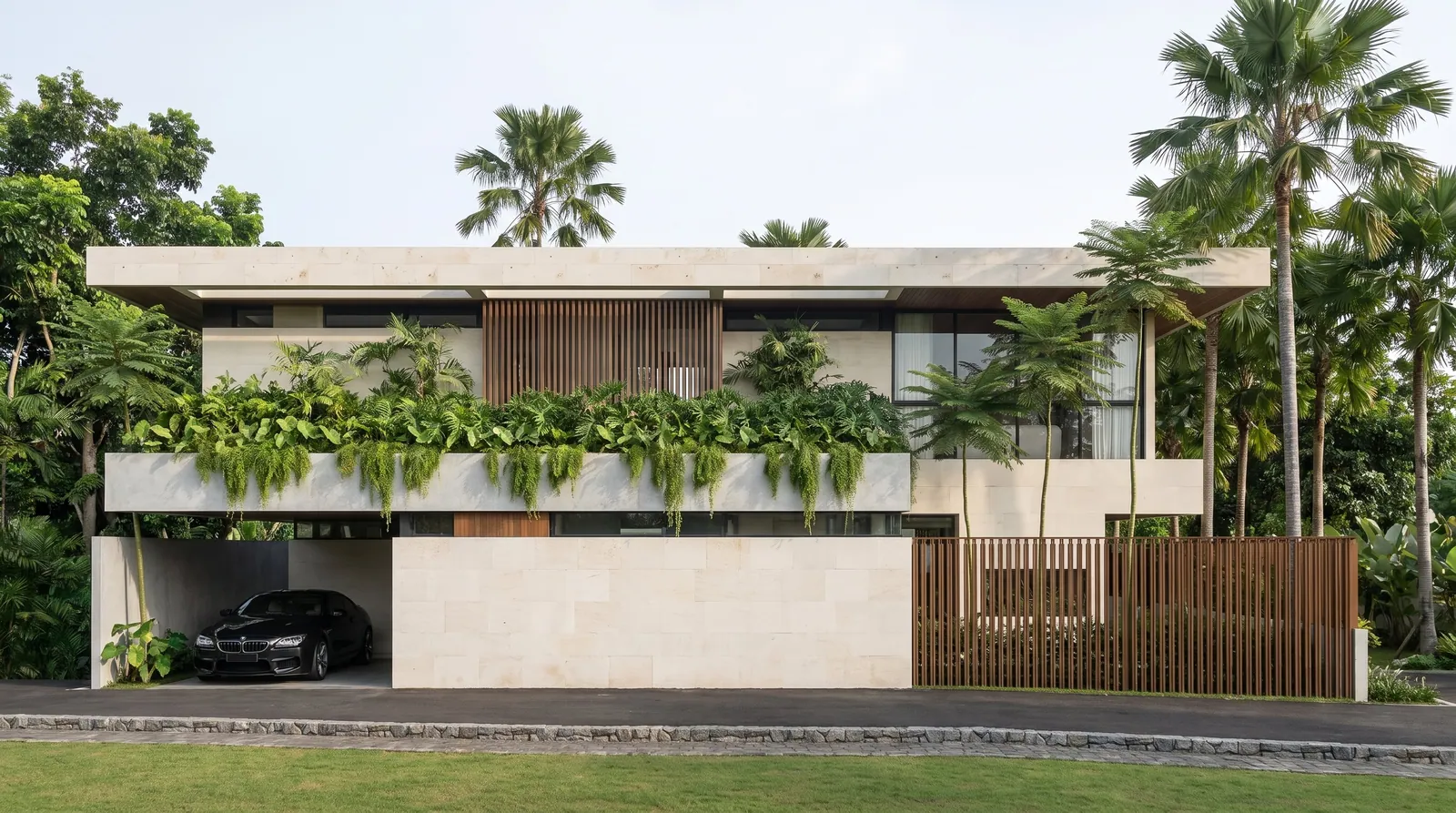
There is a demand story underneath this too. Well-located Uluwatu villas have seen strong price growth as the area has matured, and inventory that is genuinely foreign-ownable and correctly structured is a smaller pool than the headline market suggests. For current figures and trends, our review of Uluwatu property prices in 2026 has the detail. Any numbers you read, there or elsewhere, should be treated as indicative and checked against live comparables before you rely on them.
The practical takeaway is that structure is not paperwork you tidy up after the fact. It is part of the value. Two villas that look identical can be worth materially different amounts depending on how the title is held and how cleanly it will transfer to the next owner.
The nominee trap, and why the compliant route is different
It is worth being direct about the arrangement this market is replacing. In a nominee structure, land is registered to an Indonesian individual while a foreigner provides the money and holds private agreements meant to prove the real ownership. It was common, it was cheaper, and it was never safe.
The weakness is structural. Indonesian law does not recognise a foreigner's hidden beneficial ownership of freehold land, and courts have repeatedly treated nominee side agreements as unenforceable. If the nominee dies, divorces, falls into debt or simply changes their mind, the foreign buyer's protection can evaporate. There is no reliable remedy, because the law was never on the buyer's side to begin with.
The HGB via PT PMA route is a different thing entirely, and it matters that buyers do not blur the two. It is not a loophole or a disguise. It is the recognised legal structure for foreign investment in Indonesian property: the company openly holds the title, the ownership is on the record, and the asset transfers through the company in a way the system is built to support. Compliant costs a little more and asks a few more questions up front. It is the difference between owning something and hoping to.
The risks that remain, and the due diligence that matters
A compliant structure removes the worst risk. It does not remove the need to check carefully, and a new market attracts sellers of varying quality alongside the good ones. The title can be sound and the specific deal still weak if zoning, permits or the developer's track record do not hold up.
A buyer's due-diligence checklist
- Confirm the exact title on the land, Hak Milik being converted, existing HGB, or HGB to be issued, and who holds it today.
- Verify the PT PMA is real, correctly licensed for property activity, and that its ownership and the land title are consistent.
- Check zoning and that the land is designated for your intended use, with building permits valid and in place.
- Review the renewal and extension terms in writing, including what each step is conditional on and who is responsible for it.
- Confirm land and building taxes are current, with no liens, disputes or overlapping claims on the parcel.
- Vet the developer: completed projects, delivery record, and whether earlier buyers received clean, transferable title.
- Use an independent notary and a lawyer who act for you, not for the seller.

None of this is a reason to hesitate. It is the ordinary cost of buying a real asset, and it is far cheaper done before you sign than discovered afterwards. Our Bali property due-diligence guide walks through each check in full.
A word on 2026 and getting the structure right
Rules move, and 2026 has brought changes worth knowing. Bali has tightened aspects of PT PMA registration for certain lower-risk business categories, which affects how some companies are set up and where they are domiciled. It does not close the door on foreign ownership of well-structured property, but it does reward buyers who work with advisers who are current on the detail.
This is the honest limit of any article, including this one. Land law and company rules are specific to your parcel, your intended use and the month you transact. Figures and durations shift, and what was standard two years ago may not be today. Use writing like this to understand the shape of the market and the right questions to ask, then confirm the specifics with a licensed Indonesian notary and lawyer before committing. That is not a disclaimer tacked on at the end. It is the method the smartest buyers use.
How to buy into the freehold market properly
Buying well in this market is less about finding a secret deal and more about refusing to compromise on the basics. Buy where the title is structured correctly from the outset, not patched together to close a sale. Deal with developers who show you the structure openly and whose earlier buyers hold clean, transferable title. Keep your own independent legal advice throughout. Treat the structure as part of the asset, because it is.
Our own projects are built to that standard. Art Villas Bali is a design-led developer in Uluwatu, and our flagship, Ulu Art Bay, is freehold held as HGB within a PT PMA, designed by the studio SUKYF, available off-plan from around 719,000 US dollars. It is structured as a compliant, foreign-ownable asset from the ground up, documented so that it transfers cleanly to the next owner. We mention it as a worked example of what the properly structured version of this market looks like, not as the only option in it.
The wider point stands regardless of who you buy from. Bali has quietly become a place where foreign buyers can own, not merely rent, within a structure the law supports. That is the opportunity. The buyers who do well in it will be the ones who understand the structure, check it properly, and let the quality of the title, not the gloss of the brochure, decide what they pay. Proof, not promises.