Wellness in Uluwatu: Spas, Saunas, Ice Baths and Gyms on the Bukit
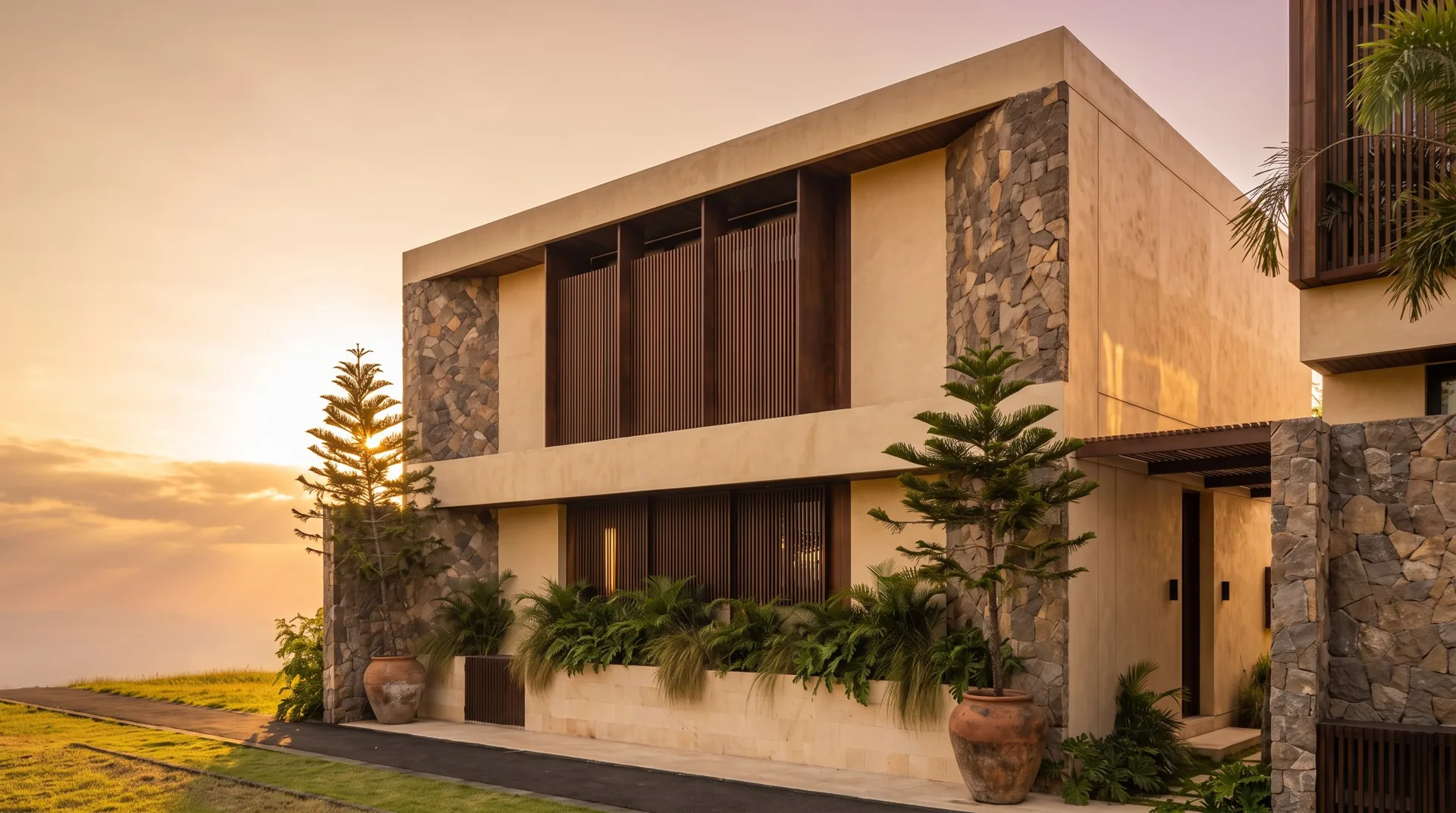
Uluwatu has quietly become one of the most serious wellness destinations in Southeast Asia. The surf and the sunsets get the attention, but underneath them is a daily culture of saunas, cold plunges, strength training, yoga and recovery that pulls a certain kind of resident to the Bukit and keeps them here.
This guide maps that culture. It covers the spas, the gyms, the cold-and-hot contrast that has become a ritual on the peninsula, and where to practise yoga and Pilates. It also looks at how a private estate takes the pieces that are scattered across Uluwatu and brings them inside the gate.
Why Uluwatu suits a wellness life
The Bukit is a limestone peninsula, dry and elevated, with clean ocean air and a long swell season that keeps people active outdoors for most of the year. That geography shapes the lifestyle. Mornings start early here, the heat flattens the middle of the day, and the pace favours training, recovery and slow evenings over nightlife. The climate itself becomes a kind of coach, pushing the real activity to the cool hours and rewarding anyone who builds a steady routine around it.
The result is a resident community that treats wellness as routine rather than retreat. Surfers need recovery, remote workers need structure, and both have driven demand for proper gyms, contrast therapy and bodywork within a short drive of the cliffs. What was once a handful of studios is now a dense, credible scene.
There is a demographic behind this. Uluwatu draws a long-staying, international resident who often works remotely and builds the day around health rather than fitting it in around an office. That person wants a sauna, a strength gym, a reformer class and a good bodyworker on tap, and because enough of them now live on the Bukit, the supply has caught up with the demand. The wellness scene here is a response to who actually lives on the peninsula.
For anyone considering a home here, that matters. A place where you can train hard, recover well and eat clean without planning around it is rare, and it is one of the quieter reasons Uluwatu keeps appreciating. We cover the wider case in our look at why Ulu Art Bay is Uluwatu's standout project.
The spas worth knowing
Santai Spa
Santai has become a reference point for bodywork on the Bukit. It is the kind of place people return to weekly rather than once a holiday, built around traditional Balinese massage and recovery treatments that suit bodies worked hard by surf and training. The name itself means relaxed, and the experience is calm and unhurried rather than clinical.
The Istana
The Istana is one of the more complete wellness addresses in the area, pairing treatment and recovery with a setting that takes the Uluwatu view seriously. It reads as a destination in its own right, somewhere to spend a half day on recovery rather than squeeze in an hour. For residents it works as a regular reset; for visitors it is a reason to slow the trip down.
What both places share is a standard that would hold up anywhere. Uluwatu's spa scene is not the resort-lobby version of wellness, it is bodywork aimed at people who use their bodies, and the practitioners reflect that. Deep tissue, sports recovery and traditional Balinese technique sit alongside the gentler treatments, and the better addresses are booked by locals as much as by guests.
Thinking about Uluwatu? Our team can walk you through availability, pricing and the ownership structure at Ulu Art Bay.
Contact usSign upThe cold plunge and sauna culture
The biggest shift in Uluwatu wellness over recent years has been the rise of contrast therapy. The sequence is simple and the appeal is obvious to anyone who surfs or trains: heat in a sauna to loosen and sweat, then a cold or ice bath to shock the system, repeated in cycles. Done regularly it is one of the most reliable recovery tools there is.
What is notable in Uluwatu is how normal this has become. Cold plunge and sauna sessions are now a social fixture as much as a private one, built into mornings alongside coffee and a surf check. The culture rewards consistency, and the Bukit's community has leaned into it hard.
The draw is partly physical and partly mental. The heat-then-cold cycle is a genuine recovery tool for muscles worked by surf and strength training, but the discipline of sitting in a cold bath also sets a tone for the day. On the Bukit it has become a kind of morning practice, a deliberate act that people organise their first hour around, and the social side keeps them consistent in a way a solitary habit rarely manages.
This is also why the best new villas on the peninsula are being designed around recovery rather than just around a pool. A cold bath, a sauna and a shaded place to breathe afterward are becoming expected features, not extras. We go deeper into that shift in designing villas for sauna, ice bath and recovery.
Training: the Bukit's gyms
Bambu Fitness
Bambu Fitness has grown into one of the anchors of the Uluwatu training scene. It is a proper gym rather than a hotel fitness room, kitted for strength work and built for people who train seriously and often. Its presence is part of why committed athletes and long-stay residents are comfortable basing themselves on the Bukit for months at a time.
Around Bambu sits a wider ecosystem of smaller studios, functional spaces and open-air setups that take advantage of the climate. The common thread is that training here is outdoor-adjacent and consistent, built around early starts before the heat and the natural rhythm of surf and recovery that already governs the day.
The quality of the training infrastructure is easy to underrate until you have tried to keep a routine somewhere it is missing. A strong gym within a short drive, open early, properly equipped, is the difference between a fitness habit that survives a move abroad and one that quietly lapses. Uluwatu has reached the point where that is no longer a compromise, which is a real factor for anyone weighing a long stay or a home here.
The Bukit rewards consistency. Train early, recover deliberately, eat clean, and the climate does the rest.
Yoga, Pilates and breath
Yoga has been part of Bali's identity for decades, and Uluwatu carries that tradition with a clifftop setting that is hard to match. Studios across the Bukit run daily classes from gentle restorative sessions through to strong vinyasa, often with the ocean as the backdrop and the sunset as the timing.
Pilates has grown quickly alongside it, reformer-led and increasingly popular with the strength-and-recovery crowd who want controlled core work to complement surfing and lifting. The combination of yoga, Pilates and breathwork gives residents a full mobility and recovery practice without leaving the peninsula.
The setting does a lot of the work. Practising at the edge of a cliff with the swell below and the light coming up is a different experience from a city studio, and it is one of the reasons teachers and serious practitioners base themselves here. The standard of instruction has risen with the demand, and the Bukit now holds its own as a yoga destination in a country that invented the Bali yoga retreat.
Together with the spas, gyms and contrast therapy, this is what makes Uluwatu a genuine wellness base rather than a place with a few nice studios. The pieces interlock into a daily rhythm.
What a private wellness estate adds
The one friction in all of this is logistics. A good gym, a trusted spa, a cold plunge, a yoga class and a padel game are spread across the Bukit, which means driving and planning. The answer the best estates have landed on is to bring the whole stack inside the gate.
At Ulu Art Bay that takes the form of a private Recreation Club at the heart of the estate. It gathers a wellness spa with a traditional hammam, saunas, a jacuzzi and a cold bath, dedicated yoga and Pilates studios, and professional floodlit padel courts, alongside a Mediterranean fine-dining restaurant and a boutique cafe. The art gallery and in-villa dining round out a day that need not leave the grounds.
For a resident that changes the maths. Contrast therapy becomes a morning habit rather than a drive, recovery is on the doorstep, and a guest renting the villa inherits the same stack. That convenience is part of what lets an amenity-rich estate hold stronger rates and occupancy, which we unpack in our guide to wellness architecture and recovery villas.
There is a subtler benefit too. When the hammam, the cold bath and the studio are shared estate amenities rather than things you build and maintain alone, the standard is higher and the upkeep is handled. A single private sauna is a nice feature; a professionally run wellness spa with a hammam, saunas, a jacuzzi and a cold bath, kept and staffed as part of a managed estate, is a different order of thing. It is the difference between owning the equipment and belonging to a club.
Eating for recovery
Wellness in Uluwatu does not stop at training and bodywork. The Bukit's cafe and warung scene has matured into one of the better healthy-eating cultures in Bali, heavy on fresh fish, smoothie bowls, plant-forward plates and good coffee. For anyone building their week around recovery, that food layer matters as much as the gym.
The pattern most residents settle into is familiar: an early surf or training session, a clean breakfast, work through the flat heat of midday, a sauna-and-cold-plunge reset in the afternoon, then a slow dinner with the sunset. Uluwatu makes that rhythm easy to keep.
This is the part that visitors underestimate. A week of saunas and green bowls is a holiday; a life organised around them is a different outcome for your body and your head, and it only works if the supporting cast of gyms, spas, studios and clean kitchens is close and consistent. The Bukit has quietly assembled all of it, which is why the wellness crowd has stopped treating Uluwatu as a retreat and started treating it as a base.
Building wellness into where you live
If you take wellness seriously, the deciding question when you buy is not whether good studios exist nearby, it is how much of the daily routine you can do without leaving home. A villa minutes from Bingin with its own spa, sauna, cold bath and courts is a different proposition from one that depends entirely on driving out for every session.
It is also the thing that pays off twice. A villa built for wellness serves you as a resident and serves a guest as a renter, because the audience that pays the strongest nightly rates on the Bukit is precisely the wellness-minded, long-staying traveller who wants a sauna, a cold bath and a studio where they sleep. Designing for your own routine and designing for yield turn out to be the same decision.
That is the logic behind the way Ulu Art Bay is planned, and it is worth seeing against the rest of what the Bukit offers. If you want to understand how this lifestyle feeds rental performance and resale, start with why Ulu Art Bay stands apart, then contact our team to talk through a specific villa, or sign up to follow the next release.
Frequently asked questions
Is Uluwatu a good place for a wellness lifestyle?
Yes. The Bukit has a dense wellness scene, proper gyms like Bambu Fitness, bodywork at spas such as Santai Spa and The Istana, a strong sauna and cold-plunge culture, and daily yoga and Pilates, all within a short drive of the cliffs.
Where can you do a sauna and ice bath in Uluwatu?
Contrast therapy is widely available across the Bukit and has become a daily ritual for the active community. Some private estates, including Ulu Art Bay, build a sauna, hammam and cold bath into their own Recreation Club so residents can do it at home.
Are there good gyms in Uluwatu?
Yes. Bambu Fitness anchors the training scene as a proper strength gym, surrounded by smaller studios and open-air setups that suit the climate and the early-morning routine most residents keep.
Can you get wellness amenities inside a villa estate?
At Ulu Art Bay, yes. Its private Recreation Club includes a wellness spa with a hammam, saunas, a jacuzzi and a cold bath, plus yoga and Pilates studios and padel courts, so recovery is on the doorstep rather than a drive away.