Wellness Architecture: Designing Villas for Recovery and Biohacking
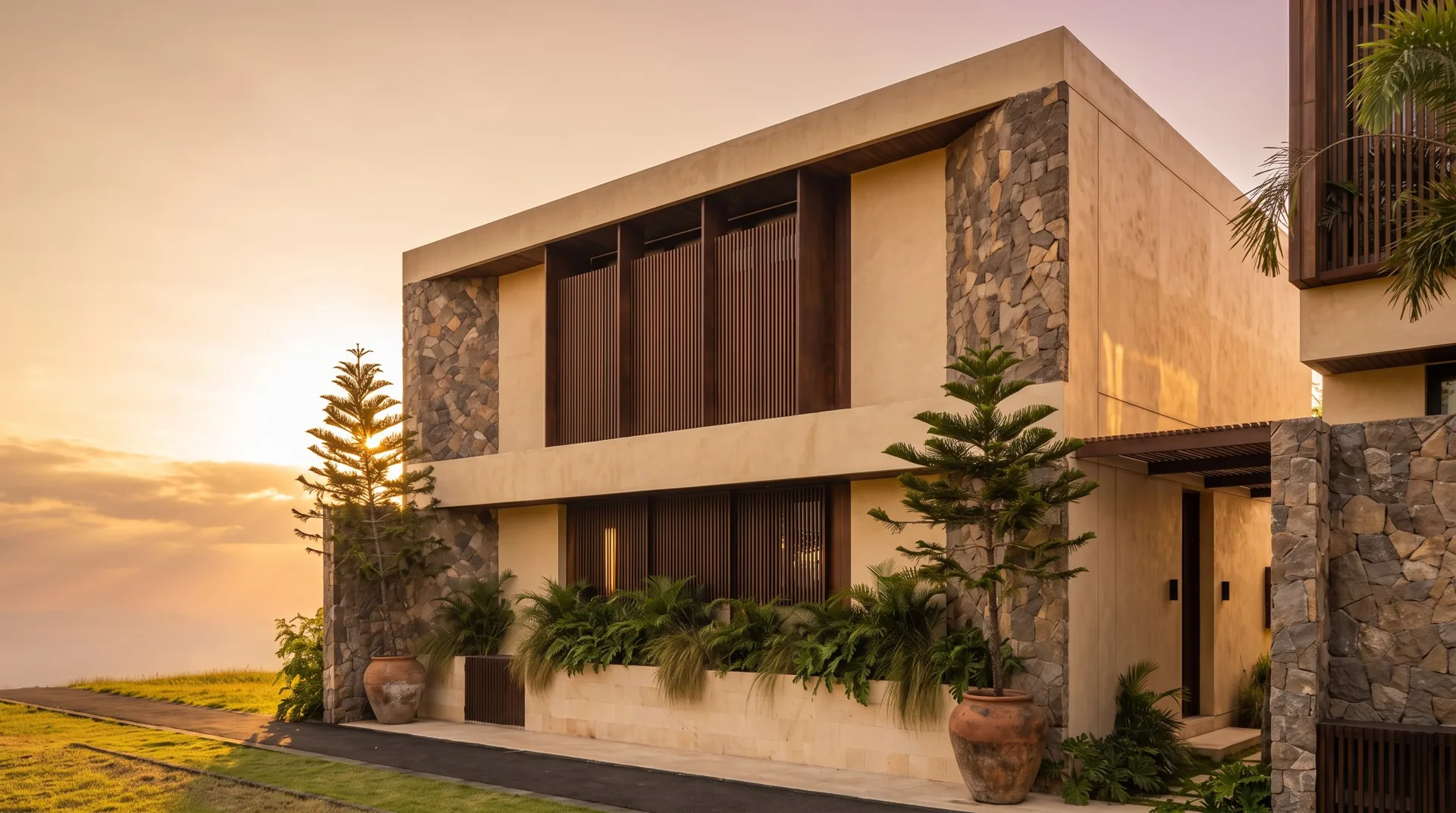
The luxury villa used to be measured by its finishes. It is now increasingly measured by what it does to the people inside it. A new generation of buyers wants a home that supports sleep, training and recovery as deliberately as it handles a dinner party, and that demand has started to change how villas are designed from the plan up.
This is a look at wellness architecture: the rooms and systems that make a wellness villa in Bali work, the biohacking-led thinking behind them, and how SUKYF integrates recovery into both the private villas and the shared Recreation Club at Ulu Art Bay.
From amenity to architecture
For a long time wellness was an amenity bolted onto a villa after the fact, a treadmill in a spare room, a plunge pool squeezed into a corner. Wellness architecture treats it as a design discipline instead. The question changes from where do we put the gym to how does this house support a body across a day, and that reorders the plan.
It shows up in orientation that puts morning light where you wake and train, in acoustic separation so a sleeping room is genuinely quiet, in ventilation and shade that keep a space usable through the heat, and in dedicated rooms for heat, cold and movement rather than repurposed ones. The result is a home that reads as calm and uncluttered precisely because the systems that make it restorative were planned, not added.
The shift mirrors a change in the buyer. A decade ago the brief was a beautiful house with a pool and a view. Today the same buyer, often someone who trains seriously and travels for months at a time, wants the house to keep that routine intact rather than interrupt it. They are not asking for a gym and a spa bolted on, they are asking for a home that was conceived around how a body moves, trains, recovers and sleeps across a day. That is a deeper brief, and it is the one wellness architecture answers.
This is the thread that connects a wellness villa to the broader art-led approach we take to design, where the building and its purpose are resolved together rather than decorated afterward. We go further into that philosophy in the art-led villa.
The recovery stack: heat, cold and the hammam
At the centre of a recovery-focused villa is a simple pairing that has moved from elite sport into everyday wellness: heat followed by cold. A sauna drives a deep heat exposure, and a cold or ice bath immediately after delivers the contrast that people now build their mornings around. Designing for it is not trivial. It asks for the right power and drainage, materials that tolerate repeated heat and moisture, and a layout that puts the sauna and the cold bath within a few steps of each other so the ritual flows.
A traditional hammam adds a third note, a steam-and-wash ritual with its own heat, stone and humidity requirements. Built properly, these rooms are quiet, sealed and durable. Built as an afterthought, they fail early and feel like a compromise. The difference is entirely in whether the architecture anticipated them.
A standard across our homes
A private sauna and a cold or ice bath have become close to a standard expectation across Art Villas Bali homes, not a top-tier extra. The thinking is consistent across our projects. Even the separate Uluwatu Art Villas development gives every villa a private sauna and ice bath. The recovery stack is no longer a luxury flourish; it is part of what a serious villa is now expected to contain.
Thinking about Uluwatu? Our team can walk you through availability, pricing and the ownership structure at Ulu Art Bay.
Contact usSign upMovement rooms: yoga, Pilates and calisthenics
Recovery is one half of the equation and movement is the other. A wellness villa plans for both. A yoga and Pilates space wants a clear, uncluttered floor, good natural light, acoustic calm and a connection to the outdoors so a session can open onto air and view. It is as much about what is left out of the room as what is put in.
Calisthenics and bodyweight training have pulled strength work out of the mirrored gym and into open structure, a frame, a bar, a clear patch of floor or terrace. That suits a villa far better than a wall of machines, because it folds training into the architecture rather than quarantining it in a windowless room. The brief for the designer is to leave the right volumes and anchor points and then stay out of the way.
The outdoor dimension is part of the appeal. In Uluwatu's climate a session can happen on a terrace in the early light rather than under a ceiling, which is better for the body and better for the architecture, because it means the training space does not have to be a dedicated room at all. A well-proportioned terrace with the right structure does double duty as a place to move and a place to be, which is exactly the kind of quiet efficiency a wellness-led plan is built on.
Designed like this, the movement spaces do not read as a gym at all. They read as calm, usable rooms that happen to support a strong daily practice, which is exactly what the wellness-led buyer is asking for.
Padel and the social side of fitness
Not all wellness is solitary. Padel has become the social fitness of the moment, an easy-to-learn racket game that fills courts with groups rather than individuals, and it has a natural place in a resort-grade estate. A professional court is a real piece of infrastructure, with its own dimensions, surfacing, glass and lighting, so it belongs at the estate scale rather than inside a single villa.
That is the logic of splitting wellness across two layers. The private, restorative functions, the sauna, the cold bath, the quiet movement room, live inside the villa where they are personal. The social and professional-grade facilities, the floodlit courts and the fuller spa, live in a shared club where they can be built to a standard no single home could justify.
How SUKYF integrates wellness at Ulu Art Bay
At Ulu Art Bay, SUKYF designs this across both layers. In the villas, recovery and movement are planned into the home rather than appended to it, in keeping with the three design languages a buyer can choose from: Minimal Modern, Mediterranean Luxe and Bohemian Artist. The wellness function is constant; the material language around it is the owner's choice.
At the heart of the estate sits a private Recreation Club that carries the facilities a single villa cannot. It includes professional floodlit padel courts, a wellness spa with a traditional hammam, saunas, a jacuzzi and a cold ice bath, and dedicated yoga and Pilates studios, alongside the estate's art gallery, a Mediterranean fine-dining restaurant and a boutique cafe. A resident can keep a serious daily practice without leaving the gate.
The private villa holds the restorative rituals; the Recreation Club holds the professional-grade facilities. Together they let a resident train, recover and reset without leaving the estate.
The club is not only a lifestyle argument. Amenity-rich estates hold rate and occupancy that one-off villas cannot, which is part of why wellness design and rental performance pull in the same direction. The full project case is set out in why Ulu Art Bay is Uluwatu's standout freehold project.
Sleep, light and the quiet house
The least visible part of wellness architecture is often the most valuable: a house that helps you sleep. Recovery does not happen in the sauna, it happens overnight, and the building either supports that or quietly undermines it. The levers are light, sound and temperature, and all three are architectural decisions made long before the furniture arrives.
Light is designed in two directions. Morning light is welcomed into the spaces where you wake and move, because daylight early in the day anchors the body's rhythm. Then the sleeping rooms are designed to go genuinely dark, with the orientation and shading that let a room shut out the tropics when it needs to. Sound is the second lever, acoustic separation that keeps a bedroom quiet even when the rest of the house is awake, which in the tropics also means managing the openness that makes a villa feel light without letting it carry noise. Temperature is the third, cross-ventilation, shade and thermal mass that keep a room comfortable without fighting the climate.
Get these right and the house itself lowers the nervous system. That is the quiet ambition of wellness architecture, a home that is restorative before anyone switches on a single device, which is exactly the calm that the black, white and grey material language is built to protect.
What wellness design means for rental performance
Wellness is not only a lifestyle argument, it is a commercial one, because the guest who seeks it out is the guest who rents best. Uluwatu has grown a serious wellness culture around studios, spas and recovery venues across the Bukit, and the visitor it attracts comes for longer and pays more. A villa that supports that guest's routine, with a private sauna and ice bath, a quiet movement space and access to professional facilities, books stronger stays than one that offers only a pool.
This is why wellness design and yield pull in the same direction. Amenity-rich estates hold rate and occupancy that one-off villas cannot, which is what underpins the projected 8 to 11% net rental yield across the Ulu Art Bay collections, modelled at 60 to 80% occupancy. The recovery stack and the Recreation Club are not costs that sit outside the investment case, they are part of what makes the investment case work. We set the full picture out in Uluwatu villa investment and yields.
The lesson for a buyer is to read wellness features as revenue infrastructure, not indulgence. The sauna that improves your morning is the same sauna that lengthens a guest's stay, and the two are not in tension.
The rise of biohacking-led design
Behind all of this is a shift in what buyers are optimising for. Biohacking, the practice of using measurable inputs like heat, cold, light, sleep and movement to improve how the body performs, has moved from the fringe into mainstream wellness, and it changes the brief a designer is handed. The client is no longer asking only for beautiful rooms. They are asking for a home that actively supports a protocol.
In practice that means designing for daylight and darkness as deliberately as for sightlines, planning the heat and cold functions as core infrastructure rather than extras, leaving clean volumes for movement, and keeping the whole thing calm enough that the house itself lowers the nervous system. Uluwatu, with its clifftop air, ocean outlook and active surf-and-wellness culture, is a natural home for this kind of living.
Designing one for yourself
A wellness villa is not a style, it is a set of decisions made early. Plan the recovery stack and the movement rooms into the architecture, separate the private rituals from the shared professional facilities, and choose a material language that keeps the result calm rather than clinical. Get those right and the house supports the life you actually want to live in it.
If you want to see how this is resolved in practice, from the private sauna and ice bath in each home to the Recreation Club at the estate's heart, look at Ulu Art Bay or read our companion piece on how Art Villas Bali builds. When you are ready to talk specifics, contact our team or sign up for the next release.
Frequently asked questions
What makes a villa a wellness villa?
A wellness villa plans recovery and movement into the architecture rather than adding them later. In practice that means a private sauna and cold or ice bath designed to work together, a quiet space for yoga, Pilates or calisthenics, and orientation and acoustics that support sleep and training.
Do Art Villas Bali homes include a sauna and ice bath?
A private sauna and a cold or ice bath are close to a standard across our homes. At Ulu Art Bay the villas are designed for recovery, and the estate's Recreation Club adds a wellness spa with a hammam, saunas, a jacuzzi and a cold ice bath.
What wellness facilities does Ulu Art Bay have?
The private Recreation Club at the estate's heart includes professional floodlit padel courts, a wellness spa with a traditional hammam, saunas, a jacuzzi and a cold ice bath, and yoga and Pilates studios, alongside an art gallery, a fine-dining restaurant and a cafe.
What is biohacking-led design?
It is designing a home around measurable inputs that affect the body, heat, cold, light, sleep and movement, so the architecture actively supports a wellness protocol. It treats the sauna, cold bath and movement rooms as core infrastructure rather than extras.