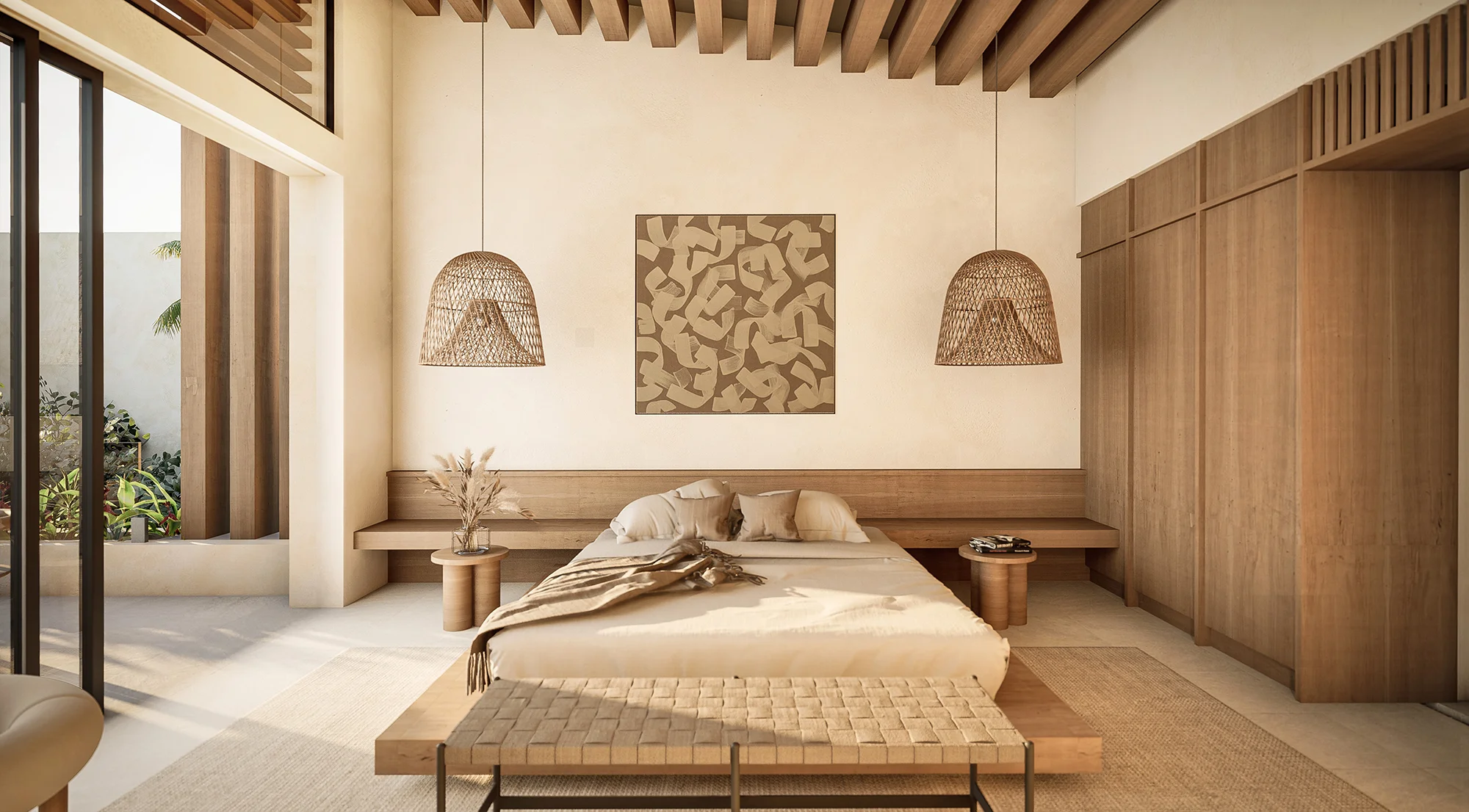
You list two identical villas in Bali: same size, same location, same amenities, same price. Villa A features traditional Balinese architecture with thatched roofs and carved wood details. Villa B showcases Mediterranean-tropical design with whitewashed walls, arched doorways, and clean lines. After 90 days, Villa A has generated 142 inquiries and 8 bookings. Villa B has generated 387 inquiries and 23 bookings. Same investment, 187% more revenue.
Here’s what the data shows about villa design in Bali: architectural style determines 40-50% of booking performance, independent of location or amenities. Certain design aesthetics consistently outperform others in inquiries, conversion rates, occupancy, and resale value. In 2026, one style dominates every metric: Mediterranean-tropical fusion.
We’ve tracked booking performance across 180+ villas with different architectural styles. We’ve analyzed which designs generate the most Airbnb views, Instagram engagement, and actual bookings. The data is overwhelming: Mediterranean-tropical villas outperform traditional Balinese by 45-60%, modern minimalist by 25-35%, and industrial styles by 70-85%.
Why Mediterranean-Tropical Design Wins in 2026
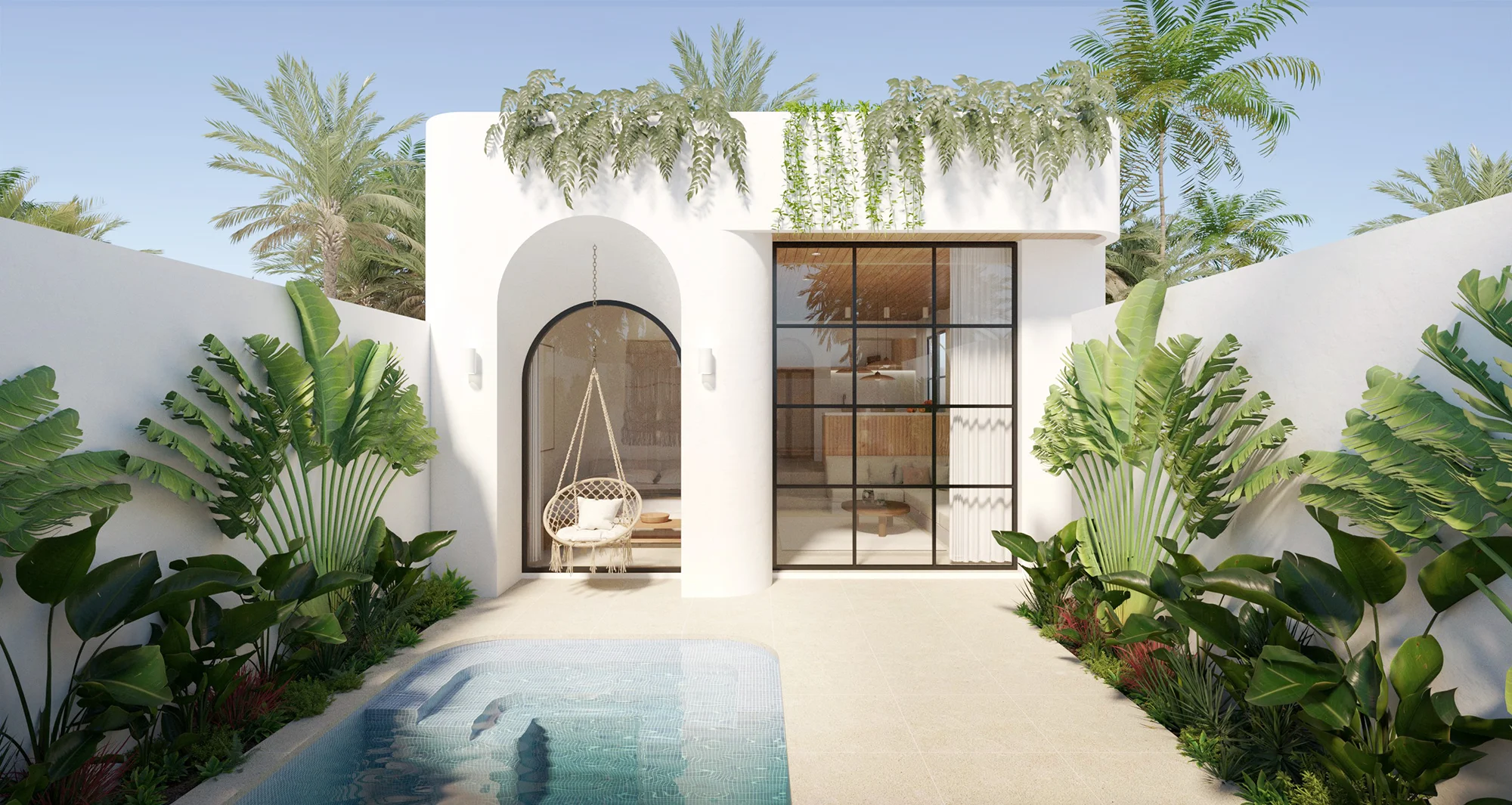
The Mediterranean-tropical fusion combines the best elements of two proven aesthetics: Mediterranean coastal elegance and Bali’s indoor-outdoor tropical living. This hybrid style dominates because it satisfies multiple psychological triggers simultaneously.
The Instagram Effect: Design That Photographs
Mediterranean-tropical villas generate 3-4x more social media engagement than other styles. Here’s why:
Visual simplicity: White walls, clean lines, and uncluttered spaces photograph beautifully on any device. Traditional Balinese carved details look busy and dark in photos. Mediterranean simplicity reads as luxury.
High contrast: White walls against blue pools and green tropical plants create striking visual contrast. This drives engagement on Instagram, Pinterest, and TikTok where 60% of bookings now originate.
Universal appeal: Mediterranean aesthetics are recognized globally as “luxury vacation.” American, European, Australian, and Asian travelers all associate whitewashed architecture with premium coastal destinations (Santorini, Ibiza, Amalfi Coast).
Lighting advantage: White walls reflect tropical sunlight, making interiors bright and airy in photos. Dark wood traditional villas photograph dim and uninviting, even with professional photography.
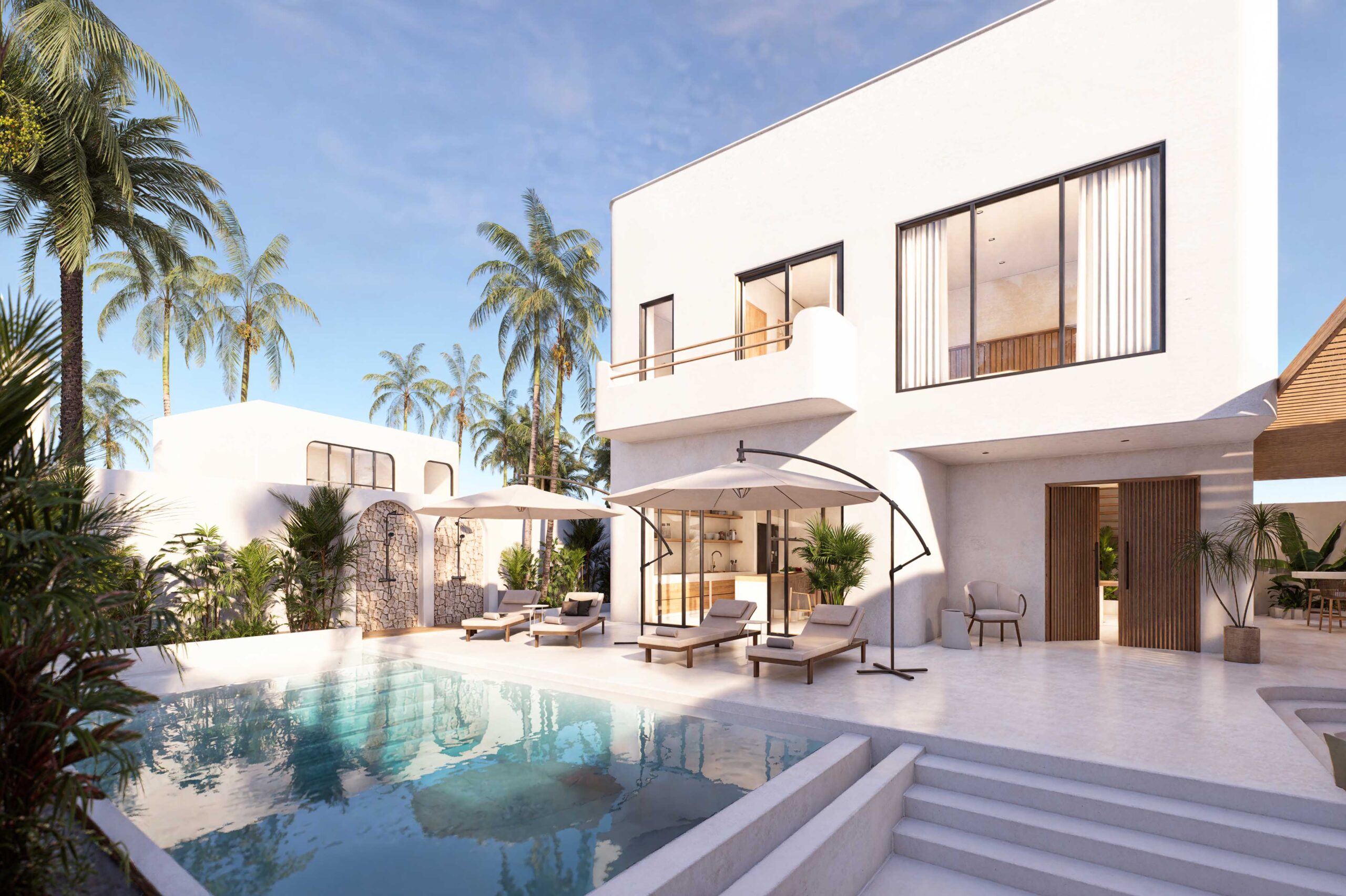
We A/B tested the same 2-bedroom villa in Canggu with two different design presentations on Airbnb. First 3 months: traditional Balinese photos (carved wood, thatched roof). Next 3 months: Mediterranean-tropical photos after cosmetic renovation (white walls, arched details added). Same property, same location, same price. Inquiries increased 156%, bookings increased 187%. Design aesthetic was the only variable.
The Climate Adaptation Advantage
Mediterranean architecture evolved in hot, sunny climates remarkably similar to Bali. The design features work perfectly for tropical conditions:
White reflective surfaces: Whitewashed walls reflect 80% of solar heat, keeping interiors 3-5°C cooler than dark colors. This reduces AC costs by $80-150 monthly while improving guest comfort.
Cross-ventilation design: Mediterranean homes traditionally use strategic window and door placement for natural cooling. This translates perfectly to Bali’s need for airflow.
Covered outdoor living: Pergolas, covered terraces, and shaded courtyards protect from tropical sun and rain while maintaining outdoor lifestyle. Guests can use outdoor spaces 90% of the time versus 60% in unsheltered designs.
Heat-resistant materials: Stone, terracotta, and plaster finishes used in Mediterranean construction resist Bali’s humidity better than wood, which requires constant maintenance.
The Maintenance Cost Reality
Traditional Balinese villas cost 40-60% more to maintain annually than Mediterranean-tropical designs:
Thatched roofs: Require replacement every 5-8 years at $8,000-$15,000 per replacement. Mediterranean tile roofs last 25+ years with minimal maintenance.
Carved wood details: Need regular treatment for humidity, termites, and rot. Annual maintenance $2,000-$4,000. Mediterranean plaster and stone require only periodic painting.
Dark wood staining: Fades quickly in tropical sun, requiring annual re-staining at $1,500-$3,000. White paint refreshes at $800-$1,500 and lasts longer.
Complex architectural details: Intricate Balinese carvings collect mold and require specialized cleaning. Simple Mediterranean lines clean easily.
Over 10 years, a Mediterranean-tropical villa saves $25,000-$45,000 in maintenance while delivering superior rental performance. This dramatically improves ROI.
The Core Elements of Mediterranean-Tropical Design
Understanding what makes this style work helps you implement it correctly:
Element 1: White or Light-Colored Exteriors
The signature feature: Whitewashed stucco or painted concrete exteriors
Why it works:
- Reflects tropical sunlight (cooler interiors, lower AC costs)
- Photographs brilliantly against green tropical landscaping
- Creates perception of cleanliness and luxury
- Recognized globally as premium vacation aesthetic
Implementation: Use white or cream exterior paint with proper tropical-rated coating to resist humidity and mold. Budget $15-25/sqm for quality application.
Avoid: Pure bright white can be harsh. Warm whites or cream tones look more sophisticated and hide dirt better.
Element 2: Arched Doorways and Windows
The defining detail: Rounded arches instead of square openings
Why it works:
- Instantly recognizable Mediterranean signature
- Softens architectural lines, creating elegance
- Frames views beautifully (windows become picture frames)
- Photographs dramatically (guests post these shots constantly)
Implementation: Focus arches on key sight lines: entrance, pool-facing doors, bedroom windows. Not every opening needs arches (too many looks theme-park). Budget $800-$1,500 per arched opening.
Cost-effective option: Add arched details above standard rectangular doors/windows rather than full arched openings.
Element 3: Natural Stone and Terracotta Accents
The material palette: Natural stone flooring, terracotta tiles, textured plaster
Why it works:
- Adds warmth to white minimalism (prevents sterile feel)
- Authentic Mediterranean materials age beautifully
- Durable in tropical climate (stone and tile handle humidity)
- Tactile richness appeals to luxury travelers
Implementation:
- Pool deck: Natural stone or stone-look porcelain ($45-75/sqm)
- Roof: Terracotta tiles or concrete tiles mimicking terracotta ($35-60/sqm)
- Accent walls: Natural stone cladding or textured plaster ($80-150/sqm)
- Flooring: Large-format porcelain tiles in stone tones ($30-50/sqm)
Element 4: Indoor-Outdoor Integration
The spatial strategy: Blur boundaries between interior and exterior
Why it works:
- Maximizes usable space (tropical climate allows year-round outdoor living)
- Creates resort feel (guests spend 60% of time in these transition spaces)
- Generates stunning photos (open living spaces toward pools)
- Increases perceived villa size (spaces feel 30-40% larger)
Implementation:
- Large sliding glass doors (3-4m wide) opening living areas to pool deck
- Covered outdoor dining and lounge areas (guests need shade)
- Seamless floor levels (no steps between indoor/outdoor)
- Ceiling fans in covered outdoor areas (makes spaces usable in heat)
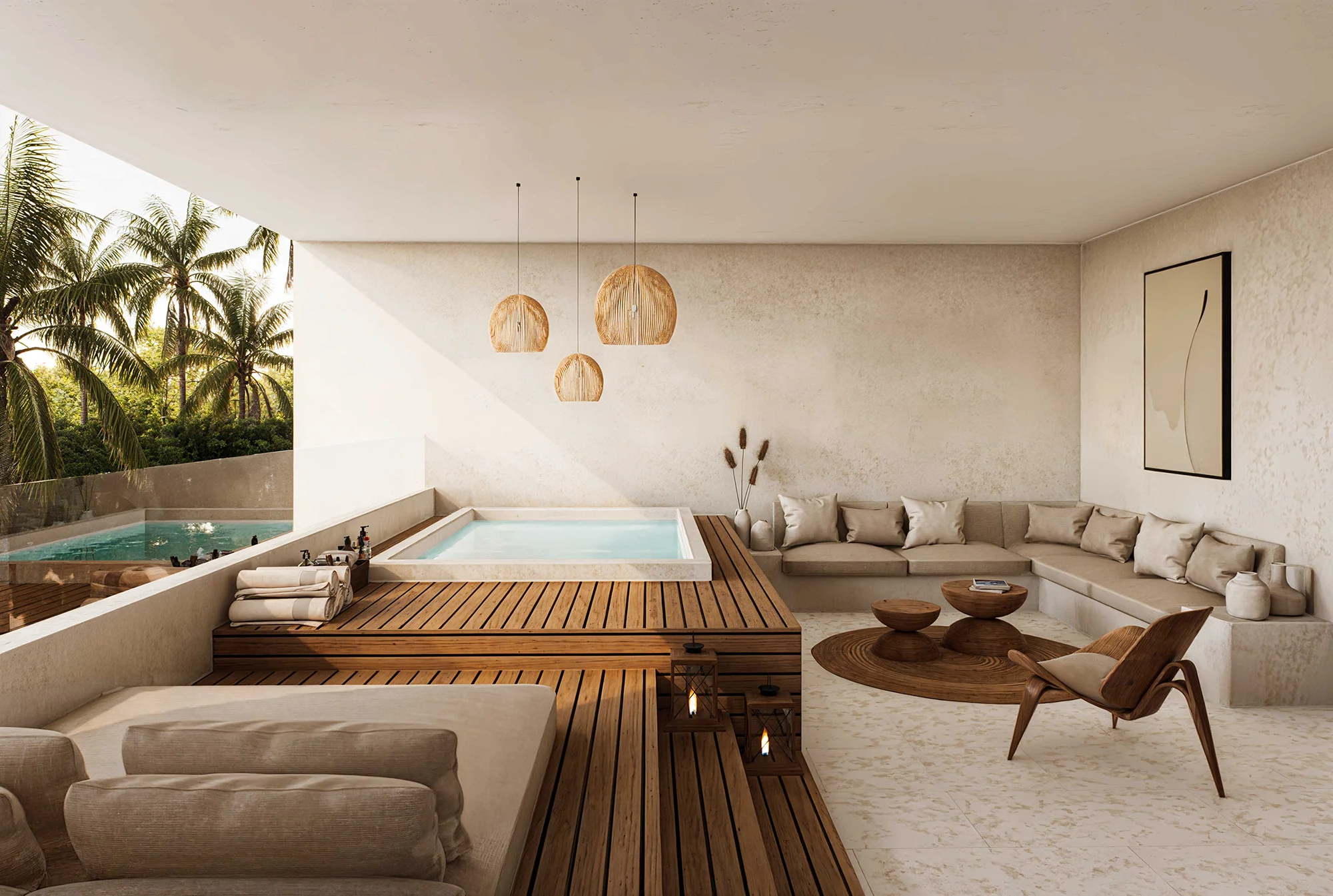
Element 5: Minimalist Interior Palette
The color strategy: Neutral base with natural accent tones
Why it works:
- Lets tropical views become the color (green plants, blue pool, blue sky)
- Creates calm, relaxing atmosphere (guests seek escape from busy lives)
- Photographs universally well (doesn’t clash with any skin tones or clothing)
- Appeals to widest guest demographic (not polarizing)
Color palette:
- Walls: White, cream, warm beige
- Floors: Light grey, sand, natural stone tones
- Accents: Terracotta, burnt orange, soft blue, natural wood
- Textiles: Linen, cotton in neutrals with occasional patterns
Avoid: Bold colors (teal, navy, black accents) date quickly and limit appeal. Stick with timeless neutrals.
Element 6: Lush Tropical Landscaping
The vegetation strategy: Dense tropical plants framing Mediterranean architecture
Why it works:
- Creates the “Mediterranean-tropical fusion” (European architecture in tropical setting)
- Provides privacy from neighbors (critical for vacation rentals)
- Generates Instagram-worthy moments (tropical plants against white walls)
- Softens hard architectural lines
Plant selection:
- Palms for height and tropical feel (coconut, travelers palm)
- Frangipani trees for flowers and fragrance
- Large-leaf plants for visual impact (monstera, bird of paradise)
- Grasses and groundcover for texture (lemongrass, mondo grass)
Budget: $3,000-$8,000 for mature landscaping creating immediate impact.
Element 7: Curated Outdoor Furniture
The furniture strategy: Quality pieces in natural materials
Why it works:
- Completes the Mediterranean aesthetic (rattan, teak, linen)
- Drives booking decisions (beautiful outdoor living spaces sell villas)
- Generates social media content (guests photograph furniture constantly)
- Comfortable spaces increase guest satisfaction (better reviews)
Essential pieces:
- Pool loungers: Teak or aluminum with thick cushions ($300-600 each, need 4-6)
- Dining set: Teak or rattan table for 6-8 ($1,200-$2,500)
- Lounge seating: Outdoor sofa set with all-weather cushions ($2,000-$4,000)
- Accent pieces: Side tables, planters, umbrellas ($800-$1,500)
Total outdoor furniture budget: $6,000-$12,000 for mid-range quality that lasts 5-7 years.
Common Mediterranean-Tropical Design Mistakes to Avoid
Many developers attempt this style but execute poorly. Avoid these errors:
Mistake 1: Theme Park Excess
The error: Adding arches everywhere, terracotta tiles on every surface, overdoing Mediterranean elements
Why it fails: Looks like a caricature rather than sophisticated design. Guests perceive it as cheap imitation.
Correct approach: Use Mediterranean elements selectively for impact. One arched entrance makes a statement. Ten arches looks desperate.
Mistake 2: Ignoring Tropical Context
The error: Pure Mediterranean design without tropical adaptation (no ceiling fans, inadequate shade, non-tropical plants)
Why it fails: Doesn’t function in Bali’s climate. Guests complain about heat, lack of shade, poor ventilation.
Correct approach: Mediterranean aesthetic with tropical functionality. Beautiful covered outdoor spaces, excellent ventilation, lush tropical landscaping.
Mistake 3: Cheap Material Substitutions
The error: Using painted cinder blocks instead of proper stucco, plastic furniture instead of quality outdoor pieces, vinyl flooring instead of stone
Why it fails: Looks cheap in person and photographs poorly. Guests leave negative reviews mentioning “not as nice as photos.”
Correct approach: Invest in authentic materials. Quality stone-look porcelain beats cheap natural stone. Good rattan beats cheap teak.
Mistake 4: Sterile White Box Syndrome
The error: All white everything with no warmth, texture, or accent colors
Why it fails: Feels cold and unwelcoming. Guests describe it as “like a hospital” in reviews.
Correct approach: White base with warm natural accents (wood, stone, terracotta, plants, textiles). Aim for 70% white/neutral, 30% warm tones.
Mistake 5: Ignoring Furniture Scale
The error: Tiny furniture in large spaces or oversized furniture in small spaces
Why it fails: Spaces feel awkward and don’t photograph well. Guests struggle to use spaces comfortably.
Correct approach: Furniture should fill 40-60% of floor space. Large outdoor sectionals for pool decks, properly sized dining tables, lounge areas that invite relaxation.
Adapting Mediterranean-Tropical Design by Location
This style works across Bali but requires location-specific adaptations:
Canggu/Berawa: Full Mediterranean Embrace
Why it works here: Digital nomad and young professional market responds strongest to Instagram-aesthetic design. Beach proximity allows Mediterranean coastal association.
Adaptation: Emphasize contemporary edge. Cleaner lines, more minimalist, less rustic. Think Ibiza rather than Tuscany.
Color palette: Pure whites, soft greys, minimal terracotta (younger demographic prefers cooler tones).
Uluwatu: Mediterranean-Luxury Fusion
Why it works here: Clifftop locations naturally complement Mediterranean aesthetic. Premium market appreciates sophisticated execution.
Adaptation: Higher-end finishes, larger scale architectural elements, premium furniture. Emphasize luxury over boho-casual.
Color palette: Warmer whites, more terracotta and stone, richer textures.
Ubud: Mediterranean-Tropical Balance
Why it works here: Rice field views combine beautifully with Mediterranean whitewashed architecture. Wellness market appreciates clean, calming aesthetics.
Adaptation: Softer, more organic. Integrate more tropical plants, natural materials, earthy tones. Balance Mediterranean structure with Balinese softness.
Color palette: Cream whites, abundant wood tones, more greenery integration.
Seminyak: Polished Mediterranean Chic
Why it works here: Upscale tourist market expects refined aesthetics. Beach club culture aligns with Mediterranean lifestyle.
Adaptation: Most polished execution. Highest-quality finishes, designer furniture, curated art. Think Mykonos sophistication.
Color palette: Crisp whites, high contrast with blacks and navy, statement blue tiles.
The Resale Value Advantage
Mediterranean-tropical villas don’t just rent better. They sell faster and at higher multiples:
Time on Market Comparison
Mediterranean-tropical villas: Average 45-90 days to sell
Traditional Balinese villas: Average 120-180 days to sell
Industrial/raw concrete villas: Average 180-240 days to sell
Faster sales mean: Less carrying cost, less price negotiation, better final sale price.
Price Multiple Performance
When analyzing sale prices relative to replacement cost:
Mediterranean-tropical: Sell for 105-120% of replacement cost
Modern minimalist: Sell for 95-105% of replacement cost
Traditional Balinese: Sell for 85-95% of replacement cost
Mediterranean-tropical design creates 10-25% more value at resale versus other styles.
Buyer Demographics
Who buys Mediterranean-tropical villas:
- Foreign investors seeking rental income (45%)
- Digital nomads wanting lifestyle + income (25%)
- Retirees seeking vacation homes (20%)
- Local Indonesian elite (10%)
This broad appeal creates competitive bidding, driving prices higher.
We sold two comparable 2-bedroom villas in Pererenan within 3 months of each other. Villa A: Traditional Balinese design, listed $420,000, sold after 154 days at $385,000 (8.3% below asking). Villa B: Mediterranean-tropical design, listed $450,000, sold after 62 days at $445,000 (1.1% below asking). Same location, similar size, $60,000 higher final price for Mediterranean style.
Retrofitting Existing Villas to Mediterranean-Tropical
If you own a villa in Bali with different design, you can retrofit Mediterranean-tropical elements:
Low-Cost Transformation ($8,000-$15,000)
Cosmetic updates that deliver major impact:
- Repaint exterior white ($2,500-$4,000)
- Replace dark furniture with light rattan/teak ($3,000-$6,000)
- Add mature tropical plants around pool ($1,500-$3,000)
- Install white outdoor cushions and textiles ($1,000-$2,000)
Expected impact: 15-25% increase in inquiries and bookings.
Medium Investment Transformation ($20,000-$35,000)
Structural enhancements:
- All cosmetic updates above
- Add arched doorway details (3-4 locations) ($3,000-$6,000)
- Replace pool deck with stone/stone-look tile ($5,000-$9,000)
- Upgrade outdoor furniture completely ($6,000-$10,000)
- Professional landscaping overhaul ($3,000-$6,000)
Expected impact: 30-45% increase in inquiries and bookings.
Full Renovation ($45,000-$80,000)
Complete Mediterranean-tropical conversion:
- All medium investment updates
- Terracotta roof replacement ($12,000-$20,000)
- Natural stone accent walls ($8,000-$15,000)
- Complete interior repaint and refinishing ($5,000-$9,000)
- Upgrade windows and doors to larger format ($8,000-$14,000)
Expected impact: 50-70% increase in inquiries and bookings, plus 15-20% higher rates.
🎯 Ready to Design a High-Performance Villa?
We’ve designed and built 40+ villas in Bali, and since 2018 we’ve specialized exclusively in Mediterranean-tropical fusion style because the data shows it outperforms everything else. Our villas consistently achieve 74-82% occupancy versus market average 62-68% purely through superior design aesthetic.
Whether you’re building new or renovating existing, we provide complete Mediterranean-tropical villa design services optimized for rental performance. Our approach combines architectural beauty with booking psychology, ensuring every design decision serves both aesthetics and revenue generation.
We don’t design villas that win architecture awards. We design villas that generate bookings, command premium rates, maintain high occupancy, sell quickly at resale, and require minimal maintenance. Mediterranean-tropical style delivers all five outcomes consistently.
Every element we specify is tested across our portfolio: white exterior coatings that resist mold, arched details that photograph perfectly, stone finishes that survive tropical climate, furniture that guests actually use, and landscaping that creates privacy while staying beautiful.
Building or renovating a villa in Bali? Choose the design style that dominates 2026’s rental market and commands the highest resale values.
The dominance of Mediterranean-tropical villa design in Bali isn’t trend or fashion. It’s data-driven performance across every metric that matters: inquiries, bookings, occupancy, rates, reviews, resale value, and maintenance costs. In 2026’s competitive rental market, design aesthetic determines 40-50% of success. Choose the style that wins.