

You’ve seen the Instagram posts. Perfect infinity pools overlooking rice terraces, digital nomads living the dream, and claims of 15-20% returns on villa Bali investments. The pitch sounds incredible: buy a villa in Bali, rent it out on Airbnb, and watch passive income roll in while you sip cocktails on the beach.
Here’s the reality: generating $3,000-$8,000 monthly passive income from a Bali villa is absolutely achievable, but not in the way most people think. The marketed 15-20% returns? Those are gross figures that ignore the 40-60% of revenue consumed by operating expenses. The “passive” part? That requires professional management that costs 15-25% of your income. The “$3,000-$8,000 monthly” target? That’s realistic, but only with the right property in the right location with the right structure.
Let’s cut through the hype and show you exactly how real estate investment in Bali actually works, what it really costs, and how to hit those income targets without the fantasy numbers.
The Bali Villa Market in 2026: Opportunity Meets Reality
Bali’s tourism market has fully recovered and then some. The island welcomed 7.05 million international arrivals in 2025, the highest in history, with continued growth projected for 2026. But here’s what the investment pitches don’t tell you: there are now over 38,000 Airbnb listings competing for those guests.
The market has fundamentally shifted. From 2021-2023, investors could throw money at almost any property in Bali and see strong returns. Those days are over. The current market rewards differentiation, prime positioning, and professional operation. Cookie-cutter villas in oversaturated areas are seeing occupancy rates drop 15-25% compared to 2023 peaks.
The villa rental market in Bali has matured from a gold rush to a real business. The investors making money now are the ones treating it like a hospitality operation, not a passive real estate play.
💰 What $3,000-$8,000 Monthly Actually Requires
Lower End ($3,000-$4,000/month net):
– Investment: $300,000-$400,000
– Location: Canggu, Berawa, Pererenan
– Occupancy: 70-75%
– Management: Professional (20% fee)
Upper End ($6,000-$8,000/month net):
– Investment: $500,000-$700,000+ OR multiple properties
– Location: Prime Uluwatu, beachfront Canggu
– Occupancy: 80%+
– Unique positioning: Ocean views, exceptional design
Reality check: Most 2-3 bedroom villas in Bali generate $1,500-$4,000 net monthly after all expenses. The $6,000-$8,000 upper range requires either significant capital, multiple properties, or exceptional performance.
Location Determines Everything: Where Your Income Actually Comes From
If you take away one thing from this guide, let it be this: location impacts your returns more than any other single factor. A mediocre villa in Canggu will outperform an exceptional villa in the wrong neighborhood.
Canggu & Berawa: The Consistent Performers
Canggu and Berawa remain the top performers for villa rental Bali operations, commanding $150-$350 per night for 2-3 bedroom properties with 70-80% annual occupancy. These areas attract digital nomads, surfers, and young travelers who create year-round demand even during wet season.
Monthly revenue ranges from $3,000-$6,000 in high season, dropping to $1,800-$3,500 during low season. A $400,000 Berawa villa achieving 80% occupancy at $280/night could generate $68,000-$81,000 annually before expenses.
The advantage: Consistent bookings across all seasons, strong infrastructure, established tourist ecosystem
The challenge: Highest competition with 8,000+ listings, prices have peaked in many micro-neighborhoods

Uluwatu: Premium Pricing, Premium Returns
Uluwatu villas target the luxury segment with cliffside ocean views, achieving $300-$500 per night during peak season. Occupancy averages 65-75% but reaches 83%+ for premium properties with unique positioning.
The area’s surf culture, stunning sunsets, and Instagram-worthy aesthetics command premium pricing. Top performers generate $50,000-$265,000 annual revenue with ROI potential of 8-15% for well-positioned properties.
The advantage: Highest ADR potential, less price-sensitive guests, strong luxury brand
The challenge: More seasonal, requires exceptional property to justify rates, limited restaurant/infrastructure compared to Canggu
Pererenan: The 2025-2026 Hotspot
Pererenan has emerged as the market’s fastest-growing investment zone. Time Out named it the “Coolest Neighborhood in the World” in 2024, and the buzz is real. Entry prices remain 20-30% lower than Canggu, but occupancy rates hit 70-90% seasonally with expected net returns of 10-14%.
Nightly rates run $140-$350 for 2-3 bedroom properties, generating $2,800-$5,500 monthly. The area offers the best balance of growth potential and current performance, though increased development means buy soon or miss the opportunity.
The advantage: Lower entry cost, high growth trajectory, less saturated than Canggu
The challenge: Infrastructure still developing, beach access limited, gentrification happening rapidly
Ubud: The Steady Alternative
Ubud property serves the wellness and cultural market with lower rates ($100-$200/night) but more consistent long-term bookings. Yoga retreats, spiritual seekers, and wellness tourists create 60-70% occupancy with gross yields of 4-8%.
Returns are lower but the market is less volatile. Many investors combine Ubud with a coastal property to diversify their portfolio across different market segments.
Seminyak: Saturated but Stable
Seminyak represents the established, prestigious end of the market. It’s beautiful, convenient, and attracts affluent tourists, but gross yields have compressed to 4-7% due to oversupply. Better suited for lifestyle purchases or long-term appreciation plays than pure rental property investment.
📊 Location Performance Comparison
| Area | Nightly Rate | Occupancy | Monthly Revenue |
| Canggu/Berawa | $150-$350 | 70-80% | $3,000-$6,000 |
| Uluwatu | $150-$500 | 65-83% | $2,500-$5,000 |
| Pererenan | $140-$350 | 70-90% | $2,800-$5,500 |
| Seminyak | $150-$400 | 65-75% | $3,000-$6,000 |
| Ubud | $100-$220 | 60-70% | $1,500-$3,000 |
The Real Investment Numbers: What It Actually Costs
Let’s talk about the capital required to enter the Bali real estate market and what you actually get for your money.
Buy vs Build: The True Cost Breakdown
Buying an existing leasehold villa in prime areas currently costs:
- Canggu: $300,000-$700,000
- Berawa: $350,000-$700,000
- Uluwatu: $400,000-$1,000,000+
- Pererenan: $250,000-$550,000
- Ubud: $200,000-$600,000
Building a custom villa costs significantly less than buying existing properties, which is why we recommend this route for serious investors. Here’s the real math:
Construction runs $560-$940 per square meter for mid-range to luxury quality. A 150sqm villa costs $84,000-$141,000 in construction alone. Add:
- Pool (6x3m): $15,000-$25,000
- Furnishings and fixtures: $15,000-$30,000
- Permits and fees: $3,000-$8,000
- Landscaping: $5,000-$10,000
Total construction cost: $122,000-$214,000
Now add land. A 30-year lease on 200sqm (2 are) in Canggu costs $56,000-$94,000 upfront at current rates of $940-$1,560 per are annually.
Complete build cost: $178,000-$308,000 for a villa that would sell for $400,000-$600,000 as an existing property.
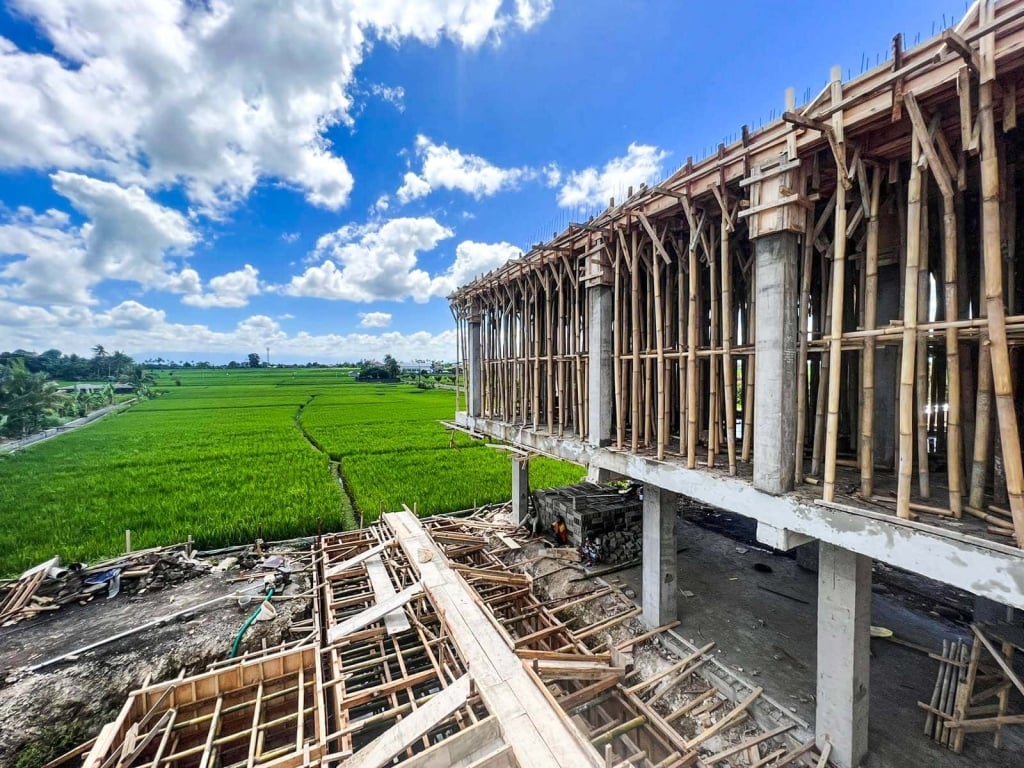
We’ve built 40+ villas and consistently see 30-40% cost savings versus buying existing properties. The timeline is 10-14 months from land acquisition to first guest, but the equity you create makes it worth the wait.
Realistic ROI Expectations for 2026
Here’s where most investment pitches fall apart. They quote gross rental yields of 12-18% without mentioning that operating expenses consume 40-60% of that revenue.
Gross rental yields in prime tourist zones run 7-15%, but net yields after all expenses typically fall to 6-10%. The break-even timeline for most investments is 10-15 years, not the 5-7 years often advertised.
Let’s work through a real example:
$300,000 villa in Berawa
– Gross annual rental: $36,000 (12% gross yield, $3,000/month average)
– Operating expenses: $18,000-$21,600 (50-60% of gross)
– Net annual income: $14,400-$18,000
– Net yield: 5-6%
– Payback period: 16-20 years
To achieve $3,000-$8,000 monthly net passive income consistently, you need:
- A premium property generating higher ADRs ($250+ per night)
- Multiple villas pooling income
- Exceptional occupancy exceeding 75% annually
- Or a combination of all three
⚠️ The Numbers Nobody Tells You
Marketed scenario: $400,000 villa, 15% gross yield, “passive income” of $5,000/month
Actual scenario:
– Gross revenue: $60,000/year ($5,000/month average)
– Management fees (20%): $12,000
– Staff costs: $10,800
– Utilities: $3,600
– Maintenance: $2,400
– Platform fees: $7,200
– Taxes (20% gross for non-residents): $12,000
– Net income: $11,000/year ($917/month)
Real net yield: 2.75%, not 15%
This is why proper tax structuring and realistic expense budgeting separate profitable investments from disasters.
Operating Costs: The 40-60% Nobody Warns You About
Understanding the true cost structure is what separates profitable villa investment from disappointment. Most investors underestimate expenses by 20-30%, and that gap destroys returns.
Property Management Fees: Your Biggest Controllable Cost
Property management services represent 15-25% of gross revenue and are absolutely worth it for remote owners. Full-service management from established companies includes:
- 24/7 guest communication and booking management
- Professional photography and listing optimization
- Dynamic pricing based on seasonality and demand
- Turnover cleaning and linen service
- Pool, garden, and maintenance coordination
- Monthly financial reporting and tax documentation
Companies like Bukit Vista charge 20% with no onboarding fees. Premium packages including OTA fees run 25-30%. Some investors balk at these rates and choose 10% “basic management,” but this consistently backfires.
The math is simple: A self-managed villa achieving 55% occupancy at $200/night generates $40,150 gross annually. A professionally managed property hitting 70% occupancy at the same rate generates $51,100. Even after 20% management fees ($10,220), net revenue is higher with professional management.
Staff Costs: The Daily Operations
Running a vacation rental Bali property requires local staff. Monthly costs for a typical 2-3 bedroom villa:
- Full-time housekeeper: $120-$220/month
- Pool maintenance: $30-$70/month
- Gardener: $50-$120/month
- Villa manager (if applicable): $300-$600/month
Total staff costs: $600-$1,400/month or $7,200-$16,800/year
Many management companies handle staff coordination, but you still pay these costs. They’re unavoidable.
Utilities: The Hidden Drain
Utilities average $200-$400 monthly for a villa with pool and air conditioning:
- Electricity: $95-$250/month (varies wildly with AC usage)
- Water: $6-$25/month
- Internet: $20-$45/month
- Gas: $12-$19/month
Guest behavior determines utility costs. A villa hosting families who run AC 24/7 will hit $350+/month. Properties targeting eco-conscious guests with good natural ventilation can keep it under $200.

Platform Fees: The Cost of Bookings
Getting guests costs money. Airbnb Bali charges 14-16% on the host-only service fee model. Booking.com takes 10-25% depending on your program level. Local agencies charge 10-15%.
On $50,000 gross annual revenue with 70% from Airbnb and 30% from Booking.com, you’re paying roughly $7,000-$8,500 in platform commissions. Direct bookings save these fees but require marketing investment and often convert at lower rates initially.
Taxes: The Expense That Destroys Returns
This is where improper structuring kills your investment. Indonesia taxes rental property income, and the difference between resident and non-resident rates is massive:
Resident with NPWP (tax ID): 10% on net income
Non-resident without proper structure: 20% on GROSS revenue
That 20% gross tax is devastating. On $50,000 gross income with $25,000 in expenses:
– Resident pays: 10% × $25,000 net = $2,500 tax, keeping $22,500
– Non-resident pays: 20% × $50,000 gross = $10,000 tax, keeping $15,000
Proper PT PMA structure saves you $7,500 annually on this example. Over 10 years, that’s $75,000 in additional net income.
Maintenance and Reserves
Tropical humidity, salt air in coastal areas, and intense UV exposure accelerate wear on everything. Budget:
- Routine maintenance: $600-$2,400/year (2-5% of property value)
- Capital reserves: $1,000-$2,000/year for major repairs
ACs fail, pool pumps break, roofs leak, outdoor furniture deteriorates rapidly. Deferred maintenance turns minor issues into major expenses.
💸 Complete Annual Expense Breakdown
On $40,000 gross annual revenue:
| Expense | Annual Cost | % of Gross |
| Management fees (20%) | $8,000 | 20% |
| Staff | $10,800 | 27% |
| Utilities | $3,600 | 9% |
| Platform fees | $6,000 | 15% |
| Maintenance | $1,500 | 4% |
| Insurance & tax | $600 | 2% |
| Total Operating Costs | $30,500 | 76% |
| Income before tax | $9,500 | 24% |
And you still haven’t paid income tax on that $9,500.
Seasonality: The Income Rollercoaster You Need to Plan For
Bali isn’t a steady 12-months-a-year market. Understanding seasonal patterns is critical for realistic income projections.
Peak Season: July-August and December-January
Peak season delivers 80-95% occupancy with rates 30-50% above baseline. July 2024 saw 625,665 visitor arrivals, the highest monthly figure on record. Christmas through New Year represents absolute peak demand when villas book 6+ months ahead.
Your $200/night villa can command $280-$300 during these periods. Properties can achieve $5,000-$8,000+ monthly in peak season.
Shoulder Season: The Goldilocks Months
April-June and September-October maintain decent 65-75% occupancy at standard rates. Weather remains good, crowds are manageable, and pricing stays stable. These months generate $3,000-$5,000 for well-positioned properties.
Low Season: November-March
Occupancy drops to 55-65% with rates discounted 20-40%. January-February represents the quietest period. Many investors panic and drop rates aggressively, but smart operators target digital nomads and remote workers during these months.
Monthly rates of $2,000-$3,500 for 30-day stays ensure cash flow even at reduced margins. Digital nomads now comprise approximately 20% of long-term rental demand, creating year-round baseline occupancy that didn’t exist a decade ago.

Properties hitting our $3,000-$8,000 monthly target average these seasonal swings: $6,000-$8,000 in peak months, $3,500-$5,000 during shoulder season, and $2,000-$3,500 in low season. Annual projections must account for 120+ days of discounted rates.
Legal Structure: How Foreigners Actually Own and Operate Villas
Foreigners cannot own Indonesian land outright, but two legal pathways enable villa investment, each with distinct implications for rental operations and tax treatment.
Leasehold: Lower Cost, Higher Risk
Leasehold arrangements remain the most common approach for sub-$500,000 investments. You sign a 25-30 year lease with extension options up to 80 years total. Entry costs run 30-50% lower than freehold equivalents, and legal complexity is manageable.
The critical disadvantage is depreciation. Your asset value declines toward zero as the lease approaches expiration. A 25-year lease is a depreciating asset from day one. You’re not in real estate investment, you’re a long-term renter with subletting rights.
For rental operations, leasehold works fine. You can operate legally, deduct expenses for tax purposes if properly structured, and generate income throughout the lease term.
PT PMA: The Professional Structure
PT PMA company structure (Penanaman Modal Asing, foreign investment company) provides HGB building rights and unlocks significant operational and tax advantages.
2025 regulations reduced minimum paid-up capital to IDR 2.5 billion (~$157,000), making this accessible for serious investors. Setup costs run $15,000-$30,000 including legal fees, with $3,000-$5,000 annual compliance costs.
The tax advantage is massive. PT PMA owners can deduct legitimate business expenses from taxable income, reducing effective tax rates from 20% (non-resident gross) to approximately 10-11% on actual profits. On $50,000 annual revenue, proper structure saves $7,500-$10,000 annually.
Required Permits for Legal Operation
Operating a villa rental legally requires proper licensing:
- Pondok Wisata license: For properties up to 5 bedrooms, costs $60-$1,200, processing takes 6-12 months
- PBG building approval: Construction permits verifying legal building
- SLF function certificate: Safety and function compliance
Critically, short-term rentals are only legal in tourism zones (pink zones) on official zoning maps. Operating in residential zones risks shutdown, fines up to $35,000, and deportation for foreign owners.
July 2025 saw 48 illegal structures demolished at Bingin Beach as enforcement intensifies. The government is done with unlicensed operations.
🚨 Avoid Nominee Arrangements
You’ll hear about using an Indonesian “nominee” to hold freehold title in their name while you have a “secret agreement” giving you control.
This is illegal and extremely risky.
Your Indonesian nominee legally owns the property. Your “agreement” with them isn’t recognized by Indonesian courts. If they decide to keep your property, you have zero recourse. Bali authorities are fast-tracking crackdowns on nominee structures with severe penalties including property seizure and deportation.
The legal options exist. Use them.
Professional Management vs Self-Management: The Math That Matters
The self-manage versus hire-a-manager decision seems like a money-saver until you calculate the real numbers and time investment.
The True Cost of Self-Management
Self-management demands 20-40+ hours weekly:
- Guest communication: 2-4 hours daily responding to inquiries and booking questions
- Turnover coordination: 2-3 hours per changeover managing cleaning and inspections
- Maintenance oversight: 3-5 hours weekly coordinating repairs and vendors
- Marketing updates: 5-10 hours weekly updating listings, photos, pricing
- Compliance paperwork: 5+ hours monthly for tax filing and permits
This isn’t passive income. It’s running a hospitality business remotely across time zones. Most self-managed properties achieve 50-60% occupancy versus 70-80% for professionally managed properties because owners can’t respond instantly to inquiries or optimize pricing dynamically.
What Professional Management Actually Delivers
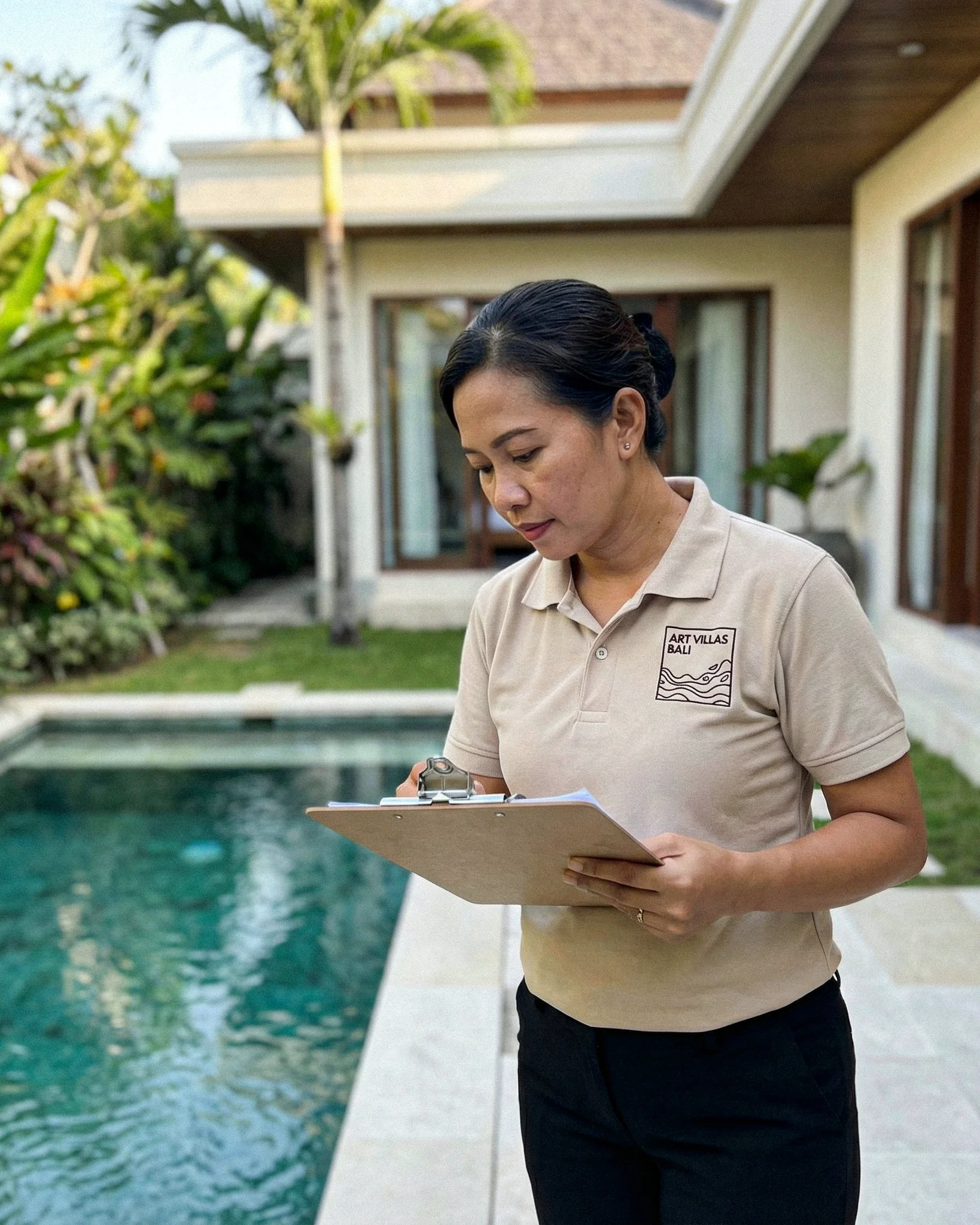
Full-service packages from established companies include:
- 24/7 guest communication in multiple languages
- Professional photography and listing optimization
- Dynamic pricing algorithms adjusting daily based on demand
- Turnover cleaning with quality control
- Preventive maintenance schedules
- Vendor management for repairs
- Monthly financial reporting with tax documentation
- Guest issue resolution
The Financial Reality
Self-managed villa: 55% occupancy at $200/night = $40,150 gross annually
Professionally managed villa: 70% occupancy at $200/night = $51,100 gross annually
Less 20% management fee: $10,220
Net improvement: $780 more than self-management
You earn more money while doing zero work. The management fee pays for itself through higher occupancy.
For remote owners, professional management isn’t optional. It’s the only way to achieve the $3,000-$8,000 monthly passive income target without it consuming your life.
What Separates Successful Investments from Money-Losing Disasters
Real case studies reveal clear patterns distinguishing profitable villas in Bali from properties that drain capital.
Success Stories: What Works
Case Study 1: Uluwatu Premium Positioning
– Investment: $227,000 (leasehold construction)
– Monthly revenue: $3,850 average
– Annual revenue: $46,200
– Gross ROI: 20.4%
– Net ROI after expenses: ~14%
Success factors: Ocean views, unique architectural design, professional photography, turnkey management accepting 20% fees, niche positioning targeting surf + luxury market.
Case Study 2: Pererenan Portfolio Approach
– Investment: Two villas at $240,000 each ($480,000 total)
– Combined monthly revenue: $6,200 average
– Annual revenue: $74,400
– Gross ROI: 15.5%
– Net ROI after expenses: ~9%
Success factors: Early entry before area saturation, different configurations (2BR + 3BR) targeting different markets, single management company for efficiency, built versus bought for equity creation.
Common Pitfalls That Destroy Returns
Ignoring leasehold depreciation. A 25-year lease loses value every year. Many investors calculate ROI based on purchase price without factoring that their asset depreciates to zero. The returns look great on paper until you realize you have no exit value.
Underestimating the 60% expense ratio. Budgeting for 30-40% expenses is the single most common mistake. Real operating costs consume 50-60% of gross revenue once you account for all the small items that add up.
Choosing cheap management to save fees. The 10% commission manager sounds appealing until you achieve 50% occupancy instead of 70%. You save $4,000 in management fees while losing $11,000 in revenue.
Operating in the wrong zones. Over 38,000 Airbnb Bali listings exist, but virtually none had proper permits as of July 2025. Government enforcement is accelerating. Operating illegally risks losing everything.
Cookie-cutter design in saturated markets. Generic modern minimalist villas blend into the 8,000+ Canggu listings. Unique architectural elements, authentic Balinese touches, or specific niche positioning (surf-themed, family-friendly, yoga retreats) command 20-30% premium rates.
✅ Success Factor Checklist
Successful villa Bali investments consistently share these traits:
- Location in proven tourism zones (Canggu, Uluwatu, Pererenan)
- Unique or distinctive design (not cookie-cutter)
- Professional management accepting 20-30% fees
- Proper legal structure (PT PMA for $500k+ investments)
- All required permits before first guest
- Realistic 10-15 year payback expectations
- Cash reserves for 6 months operating expenses
- Multi-platform distribution (Airbnb, Booking.com, direct)
- Niche positioning targeting specific guest segments
- Professional photography and staging
The Realistic Path to $3,000-$8,000 Monthly Passive Income
Let’s bring this full circle with actionable strategies for hitting your income target.
Single Property Path: The Premium Play
A $400,000-$600,000 villa in prime Uluwatu, beachfront Canggu, or emerging Pererenan with exceptional design and ocean/rice field views can generate $50,000-$90,000 gross annual revenue with professional management.
After 45-50% operating expenses, net income reaches $27,500-$49,500 annually, or $2,300-$4,100 monthly. Reaching the $5,000-$8,000 upper range requires either:
- Exceptional occupancy above 80%
- Premium ADRs above $250/night sustained
- Investment above $700,000 in true luxury segment
Portfolio Approach: Multiple Properties
Two $250,000-$300,000 villas in emerging areas (Pererenan, Seseh, Tumbak Bayuh), each generating $2,000-$3,500 net monthly, combine for $4,000-$7,000 total monthly income.
This approach:
- Diversifies location risk
- Captures growth in multiple neighborhoods
- Provides income stability (if one villa is slow, the other compensates)
- Requires more management complexity but can use same management company
Build vs Buy for Maximum Returns
Building custom villas creates instant equity. A $300,000 construction project (including land lease) creates a property worth $450,000-$550,000 upon completion. That $150,000-$250,000 equity buffer significantly improves your effective returns and provides downside protection.
The timeline is 10-14 months from land acquisition to first guest, but the equity creation makes it the highest-return strategy for investors with appropriate capital and risk tolerance.

Critical Success Factors for 2026 and Beyond
The Bali property market is maturing. The gold rush days of 2021-2023 when any property generated strong returns are over. Success now requires treating this as a real business.
Essential Requirements
Budget 50-60% of gross for operating expenses. Not 30%, not 40%. The real number is 50-60% once you account for everything. Build your pro formas on this reality.
Accept 10-15 year payback periods. Quick flips and 5-year exits rarely work in leasehold markets. Plan for long-term holding with steady income rather than fast appreciation.
Maintain 6-12 months cash reserves. AC units fail, pools crack, guests damage property, low season extends longer than expected. Reserves prevent forced sales during downturns.
Establish proper PT PMA structure for investments above $400,000. The tax savings alone justify the setup costs. Over 10 years, proper structure saves $50,000-$100,000 in taxes.
Verify tourism zone before any purchase. Check official zoning maps and confirm with local banjar (neighborhood association). Operating illegally is not a risk worth taking in 2026.
Plan for 5+ year minimum holding horizon. Shorter timeframes don’t allow recovery from inevitable slow periods, capital expenses, or market corrections.
Market Outlook for 2026-2027
Tourism continues growing with government targeting 10 million annual arrivals. Digital nomad visas and improved infrastructure support sustained demand. However, supply is also increasing, with 2,000+ new villas entering the market annually.
The winners will be properties offering genuine differentiation, exceptional guest experiences, and professional operation. The losers will be generic cookie-cutter villas relying on location alone.
🎯 Your Action Plan
Ready to generate $3,000-$8,000 monthly passive income from Bali real estate?
Step 1: Define your budget and timeline realistically (minimum $250,000 investment, 10+ year horizon)
Step 2: Choose between buying existing properties or building custom (build creates more equity)
Step 3: Select target location based on your budget and goals (Canggu/Uluwatu for premium, Pererenan for growth)
Step 4: Establish proper legal structure (PT PMA for $400k+ investments, leasehold for smaller)
Step 5: Partner with experienced property management from day one (not after struggling with self-management)
Step 6: Build realistic financial projections assuming 55% total expense ratio and 10-year payback
Whether you’re looking for a villa in Canggu, considering Uluwatu villas, or exploring emerging areas like Pererenan, we’ve guided over 500 foreign investors through the complete process from finding land to achieving positive cash flow.
We handle everything: land acquisition, architecture and design, construction management, legal structuring, permit procurement, and turnkey management so you can achieve genuine passive income without the headaches.
The opportunity to generate $3,000-$8,000 monthly from Bali villa investment is real, but it requires capital, patience, proper structure, and professional management. Approach it as a long-term business investment rather than a get-rich-quick scheme, and the returns will follow.