
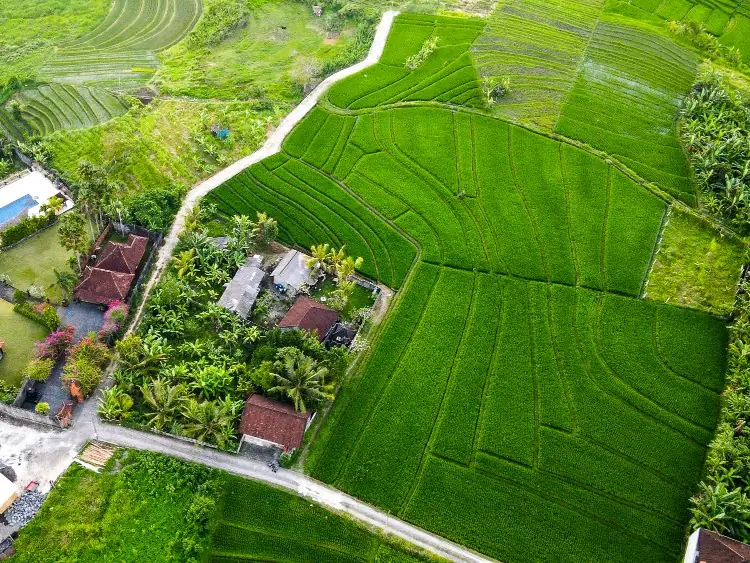
You see land for sale in Bali listed at $350,000 for 1,000 sqm. The price seems reasonable compared to neighboring plots at $500,000. You buy it. Two years later, developers build 8 villas around your land, each selling for $450,000. Your land value has tripled to $1.2 million because you bought in the path of growth before everyone else figured it out.
Or the opposite happens: You buy Bali land at $400,000 thinking you got a deal. Three years pass, no development occurs, infrastructure never materializes, and you struggle to sell for $350,000. The “bargain” was actually overpriced because you bought in an area with no growth catalysts.
Here’s what separates successful land investors from those who overpay: understanding which areas will appreciate and which won’t. In Bali’s rapidly developing market, location selection determines 80% of your returns. The other 20% is negotiation and timing.
We’ve acquired 35+ land parcels across Bali over 12 years. We’ve watched neighborhoods transform from rice fields to villa districts, and we’ve avoided areas that stayed stagnant despite promises. This guide shows you exactly how to identify undervalued land in Bali before prices explode.
Understanding Bali Land Price Zones: The 2026 Reality
Land prices in Bali vary by 300-400% depending on location, even for plots just 3-5 km apart. Understanding these price tiers helps you identify genuine value versus overpaying.
Premium Zone: $650-$950 per sqm
Locations: Canggu, Seminyak beachside, Berawa prime areas
Characteristics:
- Established tourism infrastructure
- High villa rental demand proven over 5+ years
- Direct beach access or within 1km
- Excellent road access and utilities
- Saturated with cafes, restaurants, coworking spaces
Investment case: Low growth potential (3-5% annually) but extremely safe. Demand won’t disappear. Best for developers with immediate build plans who prioritize predictable returns over appreciation.
Hidden opportunity: Small 200-300 sqm plots in these zones are often undervalued because developers prefer 500+ sqm. If building a personal villa or boutique development, these offer premium location at slight discount.
High-Value Zone: $450-$750 per sqm
Locations: Uluwatu (non-clifftop), Pererenan, Canggu periphery, Bingin
Characteristics:
- Emerging tourism areas with proven 2-3 year track record
- Good infrastructure but still developing
- 15-30 minute drive to established areas
- Active construction and development happening now
- Growing amenities (new cafes, restaurants opening monthly)
Investment case: Best risk-reward ratio. Moderate growth (8-12% annually) with strong rental fundamentals once built. These areas are 2-4 years behind premium zones on the development curve.
Sweet spot strategy: This zone offers maximum appreciation potential while maintaining rental viability. Buy now while infrastructure is 70% complete, not 100% complete.
Growth Zone: $250-$450 per sqm
Locations: Tabanan coast, Seseh, outer Pererenan, North Canggu, parts of Pecatu
Characteristics:
- Infrastructure improving but incomplete
- Some tourism activity but sporadic
- 20-45 minute drive to established areas
- Visible development but scattered
- Amenities limited to basic warungs and small shops
Investment case: High growth potential (15-25% annually) but requires 3-5 year holding period. Rental demand uncertain until area develops further.
Risk factors: Infrastructure might not materialize as expected. Government zoning could change. Requires patient capital.
Speculative Zone: $100-$300 per sqm
Locations: North Bali (Lovina, Singaraja), East Bali (Amed, Candidasa), deep inland areas
Characteristics:
- Minimal tourism infrastructure
- Poor road access or utilities
- 1+ hour from established tourist areas
- Low development activity
- Uncertain rental demand for years
Investment case: Potential for extraordinary returns (50-100%+ over 10 years) if the area develops, but high risk it never will.
Only buy if: You have 7-10 year holding period, can afford total loss if area doesn’t develop, and see specific catalysts (new road planned, major resort development announced).
The 7 Signals That Predict Land Appreciation
These indicators consistently predict which areas will appreciate 20-50% over the next 2-4 years:
Signal 1: Infrastructure Investment Announcements
What to look for:
- New road construction or road widening projects
- PLN (electricity) grid expansion announcements
- Water pipeline infrastructure development
- Fiber internet installation projects
Why it matters: Infrastructure reduces development costs by $15,000-$30,000 per property. When roads improve and utilities arrive, land becomes immediately more valuable to builders.
How to find it: Monitor local government announcements, talk to village heads (kepala desa), watch for survey crews and construction staging.
Real example: Pererenan road widening was announced in 2021. Land prices were $200-300/sqm. By completion in 2023, prices hit $500-700/sqm. Early buyers doubled or tripled their money.
Signal 2: Developer Land Banking Activity
What to look for:
- Large developers (known villa companies) buying multiple adjacent plots
- Increased land transaction volume in concentrated area
- Developers paying above-market prices (indicates confidence)
Why it matters: Professional developers research intensively before buying. If multiple developers target one area, they’ve identified growth catalysts you might miss.
How to track it: Build relationships with local land agents (makelar tanah), monitor land registry transactions, watch for surveying activity.
Red flag: Single developer buying everything. This can artificially inflate prices short-term without real demand.
Signal 3: Hospitality Anchor Developments
What to look for:
- International hotel brands announcing properties
- Beach clubs or restaurants by established operators
- Coworking spaces opening in emerging areas
- Gyms, cafes, and amenities targeting expats
Why it matters: Hospitality businesses research demand extensively. Their presence validates tourism potential and attracts more visitors, creating rental demand.
Real example: When Finns Beach Club opened in Canggu (2016), surrounding land prices increased 40% within 18 months. The anchor drew crowds, proving the area’s viability.
Signal 4: Tourism Zone Designation (Pink Zone)
What to look for:
- Official tourism zone (pink zone) designation from government
- Areas rezoned from agricultural to tourism/residential
- Removal of building restrictions
Why it matters: Tourism zones allow commercial operation of villas. Non-tourism zones restrict rentals to 30+ day leases, killing short-term rental income potential.
How to verify: Check with local planning office (Dinas PUPR), hire local lawyer to verify zoning, ask developers building nearby.
Critical: Land 500m apart can have completely different zoning. Always verify specific parcel zoning, not just general area.
Signal 5: Migration of Digital Nomad Community
What to look for:
- Coworking spaces announcing new locations
- Social media buzz about new areas (Instagram, YouTube)
- Cafes with fast wifi and laptop-friendly seating opening
- Long-term rental listings increasing
Why it matters: Digital nomads are trend-setters. Where they move, infrastructure follows. Then families and tourists follow, creating rental demand.
Current example (2026): Tabanan coast is seeing coworking spaces and nomad cafes opening. This preceded similar development in Canggu by 3 years.
Signal 6: Access Road Quality Improvement
What to look for:
- Paved roads replacing dirt roads
- Road widening from 3m to 5m+
- Addition of street lighting
- Improved drainage systems
Why it matters: Road quality determines whether guests will rent properties. Properties on bad roads get 30-40% fewer bookings regardless of quality.
Rule of thumb: Land value increases $50-100/sqm for every major road improvement between the plot and main tourist areas.
Signal 7: Comparable Sales Momentum
What to look for:
- Increasing transaction frequency in specific area
- Decreasing time properties stay on market
- Multiple offers on listings (bidding wars starting)
- Prices creeping up 5-10% every 6 months
Why it matters: Market momentum is self-reinforcing. As prices rise, investors pile in, creating more demand and higher prices.
Warning sign: Rapid 30%+ price increases in 6 months often indicate speculation bubble, not sustainable growth.
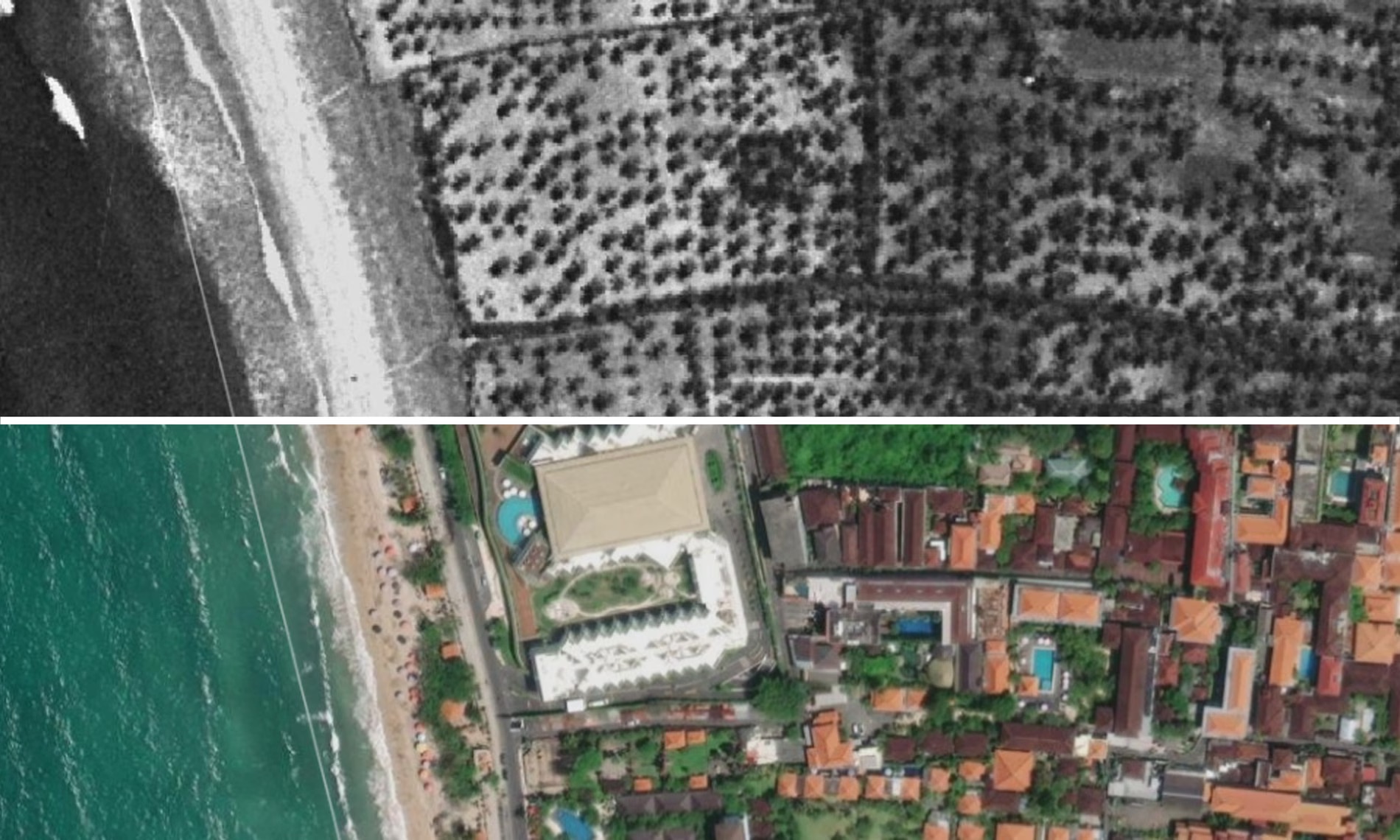
We bought 800 sqm in outer Pererenan in 2020 for $180,000 ($225/sqm). We tracked road announcements, saw developer land banking, and noticed first coworking space construction. By 2023, after road completion, the land was worth $480,000 ($600/sqm). The signals were all visible 18 months before prices moved.
Where to Look Now: 2026’s Emerging Opportunity Zones
Based on current signals, these areas show strong potential for 2-4 year appreciation:
Tabanan Coastal Belt (Top Pick for 2026-2028)
Current price: $280-$450/sqm
Predicted 3-year price: $550-$750/sqm (+80-100%)
Growth catalysts present:
- Road improvements completed 2024-2025
- 3 coworking spaces opened 2024-2025
- Beach club development announced
- Tourism zone designation confirmed for coastal areas
- Major developers acquiring land (public knowledge)
What makes it undervalued: Still perceived as “too far” from Canggu (20 min), but Pererenan had same complaint 5 years ago. Digital nomads already moving in.
Risk factors: Beach erosion in some areas, need to verify specific plot stability.
Seseh and Mengwi Corridor
Current price: $300-$500/sqm
Predicted 3-year price: $500-$800/sqm (+60-80%)
Growth catalysts present:
- Direct route to Canggu (15 minutes)
- Multiple villa developments under construction
- Rice field views appeal to mid-market renters
- Lower land costs attract first-time developers
What makes it undervalued: No beach access hurts perception, but data shows rice field villas perform well in rentals at slightly lower rates.
Risk factors: Agricultural zoning in some areas restricts commercial rentals.
South Pecatu (Beyond Uluwatu Main)
Current price: $350-$600/sqm
Predicted 3-year price: $600-$900/sqm (+50-70%)
Growth catalysts present:
- Proximity to established Uluwatu (10-15 min)
- Tourism zone designated
- Clifftop views at fraction of clifftop prices
- New restaurant and cafe developments
What makes it undervalued: Lacks direct beach access but capitalizes on Uluwatu spillover demand.
Risk factors: Water scarcity during dry season (higher operating costs).
Areas to Avoid Right Now
Overpriced/Overhyped:
- Central Canggu beachside: Prices at $800-$950/sqm leave little appreciation room
- Seminyak prime: Already maximized, 3-5% annual growth at best
- Clifftop Uluwatu plots > $1,200/sqm: Speculation premium without proportional returns
Risky/Uncertain:
- North Bali (Lovina): Tourism hasn’t materialized despite 10 years of “next boom” predictions
- Deep East Bali: Infrastructure timeline unclear, requires 7-10 year horizon
- Inland Ubud (beyond 5km from center): Rice field views don’t compensate for isolation
How to Evaluate Individual Plots: The 10-Point Checklist
Once you’ve identified a promising area, evaluate specific plots using these criteria:
1. Road Access Quality
Minimum standard: 4m wide paved road or confirmed paving within 12 months
Discount for dirt road: Reduce value by $80-120/sqm
Premium for main road frontage: Worth $100-200/sqm extra
2. Land Shape and Topography
Ideal: Rectangular plot, relatively flat, 10-15m width minimum
Acceptable: Slight slope (under 10 degrees), irregular shape but usable
Problematic: Steep slope (>15 degrees), very narrow, unusable shape
Cost impact: Difficult topography adds $30,000-$60,000 to development costs (cut and fill, retaining walls).
3. Utilities Availability
Check these:
- PLN electricity within 50m (or well power + solar feasible)
- PDAM water available OR good well drilling conditions
- Fiber internet availability (increasingly important)
- Septic system feasibility (not rock underneath)
Cost to bring utilities: $5,000-$20,000 depending on distance.
4. Zoning Verification
Mandatory checks:
- Tourism zone (pink) for short-term rentals
- Not protected green belt or agricultural preservation zone
- Building height limits acceptable (usually 15m in tourism zones)
- Setback requirements don’t consume too much plot
How to verify: Hire lawyer to check with Dinas PUPR and obtain zoning letter.
5. Title Clarity
Only buy these title types:
- Hak Milik (freehold, requires nominee or PMA structure for foreigners)
- Hak Guna Bangunan (HGB, building rights for 80 years renewable)
Avoid:
- Hak Pakai without clear renewal path
- Land claimed by village (tanah desa) without proper release
- Disputed ownership or family inheritance issues
Always: Conduct full due diligence with lawyer checking land office (BPN) records.
6. Environmental Risks
Investigate:
- Flood history (check during rainy season)
- Landslide risk on hillside plots
- Coastal erosion if near beach
- Earthquake fault zones (most of Bali has seismic risk)
How to research: Talk to neighbors, check historical satellite imagery, observe during heavy rain.
7. Neighborhood Development Stage
Ideal: 30-50% developed (construction happening, but still opportunity)
Acceptable: 10-30% developed (early but signs of momentum)
Too early: <10% developed (may take 5+ years)
Too late: >70% developed (appreciation already captured)
8. Distance to Amenities
Measure proximity to:
- Beach or tourist attraction: 1-3km ideal, >5km reduces rental appeal
- Restaurants/cafes: Within 2km, guests won’t drive far for breakfast
- Minimarket: Within 1km, critical for villa guests
- Medical clinic: Within 10km for guest safety
9. View and Privacy
Premium views (worth $150-300/sqm extra):
- Ocean views (especially sunset facing)
- Rice field views (unobstructed, confirmed permanent)
- Valley or river views
Verify permanence: Check zoning of view-facing land to ensure it can’t be built on.
10. Transaction Comparables
Research recent sales:
- Find 3-5 comparable transactions within 500m
- Adjust for plot size, road access, view, timing
- Target paying 10-20% below recent comparables
Where to find data: Local agents, land registry (BPN), developer contacts.
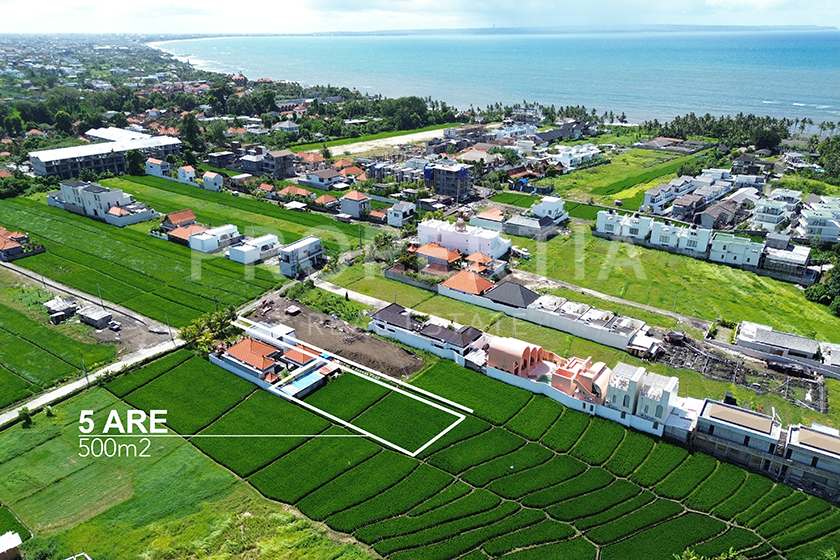
Negotiation Strategies for Bali Land Purchases
Land for sale in Bali is rarely priced correctly. Sellers inflate asking prices 20-40% expecting negotiation. Use these tactics:
The Comparable Analysis Approach
Strategy: Present seller with data on 3-5 recent comparable sales at lower prices.
Script: “I’m very interested in your land, but I’ve researched recent transactions. Here are three similar plots sold at $X per sqm in the past 6 months. Based on these comparables, I can offer $Y.”
Works when: You’ve done genuine research and can prove your price is market-based.
The Development Cost Justification
Strategy: Explain your development budget and work backward to land price.
Script: “I’m building a 2-bedroom villa. Construction costs $180,000, furniture $25,000, professional fees $20,000. To achieve 8% ROI, I need total investment under $300,000. That leaves $75,000 for land at your size, which is $X per sqm.”
Works when: Seller understands you’re a serious buyer with real project plans.
The Quick Cash Close
Strategy: Offer slightly below market but with fast, certain closing.
Script: “Your asking price is fair, but I can pay cash and close in 14 days. For quick certainty, I’ll offer $X (10-15% below asking). No contingencies, no delays.”
Works when: Seller needs cash quickly or has been trying to sell for months.
The Infrastructure Discount
Strategy: Identify lacking infrastructure and negotiate price reduction.
Script: “The land is good, but there’s no PLN electricity and the road needs paving. Those improvements will cost me $15,000. I can pay $X (reflecting these costs), or you can complete the improvements and I’ll pay your asking price.”
Works when: Infrastructure gaps are objectively verified.
The Due Diligence Process: Never Skip These Steps
Bali land purchases gone wrong usually fail during due diligence. Follow this process religiously:
Phase 1: Title Verification (Week 1)
Hire local lawyer to:
- Verify ownership at land office (BPN)
- Check for liens, encumbrances, or restrictions
- Confirm no disputes or court cases
- Verify boundaries match certificate
- Check inheritance issues if multiple family members involved
Cost: $800-$1,500
Phase 2: Zoning and Permits (Week 1-2)
Lawyer verifies:
- Current zoning designation
- Tourism zone status for short-term rentals
- Building height and setback requirements
- Environmental restrictions
- Village (banjar) approval requirements
Cost: Included in legal fees above
Phase 3: Physical Inspection (Week 1-2)
Hire surveyor to:
- Verify plot dimensions match certificate
- Identify boundary markers
- Check for encroachments from neighbors
- Assess topography and drainage
- Test soil conditions if building immediately
Cost: $400-$800
Phase 4: Infrastructure Assessment (Week 2)
Verify availability:
- Walk property with PLN representative (electricity)
- Check PDAM water or well drilling feasibility
- Test internet connectivity if critical
- Confirm road access is public (not private requiring easement)
Cost: $200-$400 for professional assessment
Phase 5: Environmental and Risk Check (Week 2-3)
Investigate:
- Talk to 3-5 neighbors about flood history, issues
- Check property during heavy rain if possible
- Review historical satellite imagery for changes
- Assess nearby development plans that could impact value
Cost: Minimal, personal research
Phase 6: Final Documentation (Week 3-4)
Before closing:
- Final walk-through confirming nothing has changed
- All documents translated to English and reviewed
- Payment structure agreed (typically 30% deposit, 70% at closing)
- Notary appointment scheduled
- Ownership structure finalized (lease, HGB, PMA)
Total due diligence timeline: 3-4 weeks minimum
Total due diligence cost: $1,500-$3,000
We once walked away from a land deal 48 hours before closing because due diligence revealed the plot had three family members claiming ownership, not just the one seller. The seller’s lawyer assured us it was “no problem,” but our lawyer found two others had inheritance claims. Walking away cost us $2,000 in due diligence fees. Buying would have cost us $180,000 and years in court.
Ownership Structures for Foreigners: Choosing the Right Vehicle
Foreigners cannot directly own freehold land in Bali. Here are legitimate structures:
Leasehold (Hak Sewa): Simplest Option
Structure: 25-30 year lease from Indonesian owner, renewable
Advantages:
- Lowest cost: $1,000-$2,000 legal fees
- Simplest documentation
- No ongoing compliance requirements
- Typically 20-30% cheaper than freehold equivalent
Disadvantages:
- No ownership, just long-term rental
- Renewal not guaranteed (though usually granted)
- Harder to finance or resell
- Owner could theoretically refuse renewal
Best for: Investors building for rental income with 15-25 year exit horizon
Hak Guna Bangunan (HGB) via PT PMA: Strongest Structure
Structure: Indonesian company (PT PMA) owns land with HGB title
Advantages:
- 80 years initial term, renewable 80 more
- Company owns land (you own company 100%)
- Can sell, transfer, mortgage property
- Strongest legal protection for foreigners
Disadvantages:
- Setup cost: $4,000-$7,000
- Annual compliance: $2,000-$4,000 (accounting, tax filing)
- Company must maintain minimum capital (usually IDR 10 billion)
- More complex management
Best for: Long-term holdings, properties worth $300,000+, professional investors
Nominee Structure: Legally Risky
Structure: Indonesian “nominee” holds freehold title, you have rights via agreement
Our position: Not recommended
Why: Indonesian law doesn’t fully recognize nominee agreements. If nominee decides to keep property, you have limited recourse. Multiple foreigners have lost properties this way.
Only consider if: You completely trust the nominee (spouse, business partner of 10+ years), understand you’re taking legal risk, and property value is modest enough to accept potential loss.
Exit Strategy: Planning Your Land Sale
Buy land for sale in Bali with exit strategy planned from day one.
Hold and Develop Strategy
Timeline: Buy land, hold 1-2 years during appreciation, then build
Target return: 15-25% appreciation during hold + property equity creation
Best for: Investors with development expertise
Hold and Flip Strategy
Timeline: Buy undervalued land, hold 2-4 years until area develops, sell undeveloped
Target return: 50-100% appreciation over 3-4 years
Best for: Pure land investors without development interest
Develop and Sell Strategy
Timeline: Buy land, immediately build, sell completed villa
Target return: 30-50% profit on total investment (land + construction)
Best for: Developers with construction experience
Develop and Hold Strategy
Timeline: Buy land, build, operate as rental, sell 5-10 years later
Target return: 6-10% annual rental yield + 50-100% appreciation
Best for: Long-term investors seeking cash flow and appreciation
🎯 Ready to Find Undervalued Land in Bali?
We’ve acquired 35+ land parcels across Bali and built 40+ villas on strategically selected plots. Our land acquisition process combines area analysis, infrastructure tracking, developer intelligence, and thorough due diligence to identify undervalued parcels before mainstream investors discover them.
Whether you want us to find and evaluate land in Bali on your behalf, or you’re searching yourself and need expert review before purchase, we provide complete land acquisition services. We identify emerging zones, evaluate specific plots against our 10-point criteria, conduct full due diligence, negotiate purchase prices, and structure ownership properly.
Our land investments consistently appreciate 40-80% over 3-4 years because we buy based on growth signals, not hype. We avoid overpriced areas, identify infrastructure catalysts early, and only buy plots with verified tourism zoning and clear titles.
Finding undervalued Bali land for sale requires local knowledge, area intelligence, and professional due diligence. We provide all three, helping you acquire land that appreciates significantly before you build or sell.
Smart land investment in Bali isn’t about finding the cheapest land. It’s about identifying areas where infrastructure, tourism, and development momentum will drive 2-4x appreciation over 3-5 years. Buy in the path of growth before others recognize it, verify everything through proper due diligence, and structure ownership correctly for long-term protection.