

You’re about to spend $150,000-$300,000 building a villa in Bali. Your architect shows you beautiful renderings with soaring ceilings, dramatic architectural features, and innovative materials. Everything looks stunning. Then you list the property and discover guests prefer the simple villa next door with better pool positioning and smarter bedroom layouts. Your architectural masterpiece generates 30% less income than it should.
Here’s what most Bali architects won’t tell you: the design decisions that win architecture awards rarely maximize rental income. The features that photograph beautifully often create operational headaches. And the “unique” elements that make your villa stand out architecturally can make it stand out as overpriced and under-booked.
We’ve designed 40+ villas in Bali specifically optimized for rental performance. We track which design decisions generate bookings and which ones just generate maintenance bills. These seven architectural strategies consistently deliver 30-40% higher rental income than generic designs, while often costing less to build.
Design Decision 1: Pool Position Trumps Villa Position
Most architects design the villa structure first, then fit the pool into remaining space. This is backwards. In Bali’s rental market, pool positioning determines 40% of your booking appeal.
The Rental-Optimized Pool Strategy
Rule #1: Pool orientation matters more than villa orientation
Guests spend 60% of their waking hours at your villa around the pool. Position the pool to capture:
- Morning sun from the east (guests breakfast poolside)
- Afternoon sun exposure (peak swimming hours 2-6pm)
- Sunset views if your property allows
- Privacy from neighboring properties
A pool facing north (away from sun) will be cold and unused 70% of the year. Guests complain in reviews, bookings drop.
Rule #2: Pool visibility from main living spaces
The pool should be visible from:
- Kitchen and dining area (parents watch kids while cooking)
- Living room (creates seamless indoor-outdoor flow)
- Master bedroom (luxury appeal for couples)
Properties with “hidden” pools in corners generate 20% fewer bookings because the connection feels awkward in photos and reality.
Rule #3: Pool depth psychology
Rental pools should be 1.2m-1.5m uniform depth, not 0.8m shallow end and 2.0m deep end. Why? Families with young children avoid deep pools. Adults don’t actually dive in rental villas. Uniform depth maximizes usability for all guests while reducing construction costs.

We redesigned a Canggu villa pool position without changing the building. Simply rotating the pool 90 degrees to face east instead of north increased bookings 28% in the first year. Same villa, same price, just better sun exposure. Pool positioning is the highest ROI design decision you’ll make.
Design Decision 2: Bedroom Configuration Beats Bedroom Count
Listing a property as “3 bedroom” sounds better than “2 bedroom,” but rental data shows configuration matters more than count.
The Optimal Bedroom Strategy
For 2BR villas (best for couples and small families):
- Master bedroom: 20-25 sqm with ensuite bathroom
- Second bedroom: 16-20 sqm with ensuite bathroom
- Both bedrooms with AC and quality mattresses
- Master with direct pool access or private terrace
Avoid: Third bedroom that’s actually just 10 sqm and shares a bathroom. This kills bookings from couples (who see it as cramped) without attracting large families (who need proper bedrooms for kids).
For 3BR villas (best for larger groups):
- All three bedrooms 16+ sqm with ensuite bathrooms
- Two bedrooms with queen/king beds
- Third bedroom with flexible twin/king configuration
- At least one bedroom separated from others (privacy for multiple couples)
Configuration rule: Bedrooms should be acoustically separated. Two bedrooms sharing a wall means guests hear everything. Groups of friends or multiple couples won’t book properties where bedrooms are too close.
The Bathroom Economics
Every bedroom needs its own bathroom. Shared bathrooms reduce nightly rates by 20-30% and cut occupancy by 15-20%. The $4,000-$6,000 cost of an additional ensuite bathroom generates $3,000-$5,000 additional annual revenue forever.
Bathroom sizing: 4-6 sqm is optimal. Smaller feels cramped, larger wastes money that doesn’t generate bookings. Include:
- Proper hot water system (not just instant heaters)
- Rain shower head + handheld option
- Adequate lighting (tropical bathrooms are dark)
- Ventilation to prevent mold
- Storage for toiletries
Design Decision 3: Open-Plan Living With Functional Zones
Villa design trends favor completely open spaces. But rental guests need functional separation even within open plans.
The Rental-Optimized Living Area
Kitchen visibility with noise separation:
- Kitchen should be visible from living/dining (supervision, social cooking)
- Kitchen work area offset from TV/lounge seating (noise isolation)
- Kitchen island creating natural boundary between cooking and living
Dining for actual meals:
- Dedicated dining table for 6-8 people minimum (groups actually eat together)
- NOT just bar stools at kitchen counter
- Positioned for pool views and breeze
- Ceiling fan above dining area (makes outdoor dining comfortable)
Living area for multiple activities:
- Sofa seating for 6+ people comfortably
- TV positioned for viewing from sofa (not as afterthought on side wall)
- Coffee table at proper height (not decorative but unusable)
- Power outlets conveniently located (guests charge devices constantly)

The AC Strategy Nobody Mentions
Open-plan living requires smart AC planning:
- Living areas need 2-3 units positioned strategically (single large unit doesn’t work)
- Units must be controllable independently (some guests want AC, others want breeze)
- Position units to avoid blowing directly on dining table or sofa seating
Poor AC planning in open spaces means guests are either freezing or sweltering. Both generate negative reviews.
Design Decision 4: Instagram-Optimized Photo Spots
In 2026, 50% of villa bookings start with Instagram photos. Designing for photography isn’t vanity. It’s revenue optimization.
The Three Essential Photo Moments
Photo Spot 1: Pool + Villa facade
This becomes your hero image on every listing. Requirements:
- Unobstructed sight line from pool edge showing full villa
- Background elements (plants, walls) framing the composition
- Morning or late afternoon light hitting villa facade
- Pool lounge area creating foreground interest
Design for this shot during schematic phase. Stand where photographers will shoot and ensure the composition works.
Photo Spot 2: Breakfast/dining setup by pool
Guests want the “floating breakfast” or beautiful table setting shot. Design for this:
- Pool shelf or integrated breakfast table in pool
- Outdoor dining area with photogenic backdrop
- Good natural light on dining area morning and evening
- Uncluttered backgrounds (not messy garden or neighbor’s wall)
Photo Spot 3: Bedroom with view to pool
The “waking up in paradise” shot drives bookings. Requires:
- Master bedroom doors/windows opening to pool view
- Bed positioned to capture view in photos
- Clean sight lines (not AC unit or plumbing in view)
- Morning light entering bedroom for that “golden hour” shot
We A/B tested listings with professional photos emphasizing designed photo moments versus standard documentation photos. The designed photo listings generated 43% more inquiries and 31% higher conversion rates at identical pricing. Designing for Instagram isn’t superficial. It’s smart business.
Design Decision 5: Material Selection for Maintenance and Aesthetics
Bali architects love natural materials. Guests love natural materials. Maintenance staff hate natural materials. Smart material selection balances all three.
Flooring Strategy
Avoid natural stone in wet areas: Limestone and sandstone look beautiful but stain from pool chemicals, turn green from algae, and require constant sealing. Properties with natural stone pool decks spend $800-$1,500 annually on maintenance.
Use: Porcelain tiles mimicking natural stone
– Cost: Similar to natural stone
– Maintenance: Minimal (annual pressure wash)
– Appearance: Identical to guests
– Durability: Survives 10+ years without issues
Interior flooring: Porcelain tiles in high-traffic areas, engineered wood in bedrooms if budget allows. Pure white tiles show every speck of dirt (constant cleaning complaints from guests). Use light grey or cream tones.
Wall Materials
Avoid raw concrete or cement render exteriors: Looks modern initially, but Bali’s humidity causes mold and staining within 6-12 months. Requires repainting every 2-3 years at $2,000-$4,000 per repaint.
Use: Painted plaster with water-resistant coating
– Initial cost: $8-12/sqm
– Maintenance: Repaint every 5-7 years
– Appearance: Clean modern aesthetic guests expect
– Mold resistance: Good with proper coating
Accent walls: Natural wood slats, stone cladding, or volcanic rock work beautifully but must be treated for humidity. Budget $150-300/sqm for properly treated materials.
Furniture Materials
Outdoor furniture must survive tropical climate:
- Aluminum or stainless steel frames (not iron/steel that rusts)
- All-weather synthetic rattan (not natural rattan that molds)
- Quick-dry foam cushions with water-resistant covers
- Teak wood for tables (naturally weather-resistant)
Properties using cheap outdoor furniture replace it every 18-24 months at $2,000-$4,000 per replacement. Quality outdoor furniture lasts 5-7 years.

Design Decision 6: Smart Storage Solutions That Guests Actually Use
Most villa designs prioritize aesthetics over functionality. Guests arrive with luggage, shopping bags, beach gear, and nowhere to put it all. Inadequate storage generates negative reviews.
Bedroom Storage Requirements
Every bedroom needs:
- Wardrobe or closet with hanging space for 10+ items
- Shelf space for folded clothes
- Safe or lockable drawer for valuables
- Luggage rack or designated luggage storage area
- Bedside tables with drawers (not just decorative surfaces)
Common mistake: Beautiful minimalist bedrooms with no storage. Guests pile clothes on chairs, floors look messy in their own photos, they leave negative reviews about storage.
Kitchen Storage
Rental kitchens need functional storage:
- Cabinet space for dishes, glasses, cookware for 8+ people
- Pantry storage for groceries (guests shop for multi-day stays)
- Refrigerator with freezer (not just mini-fridge)
- Organized storage so guests find what they need
Design tip: Closed cabinetry maintains clean aesthetic while providing practical storage. Open shelving looks good in photos but shows clutter in reality.
Utility Storage
Design dedicated space for:
- Pool equipment (nets, chemicals, cleaning supplies)
- Maintenance tools and spare parts
- Extra linens and towels
- Cleaning equipment
Properties without utility storage have pool equipment piled in corners and maintenance clutter visible to guests. Looks unprofessional, affects ratings.
Design Decision 7: Natural Ventilation Before Air Conditioning
Air conditioning costs $150-300/month in electricity for rental villas in Bali. Properties with smart natural ventilation reduce this by 40-60% while guests rate them as more comfortable.
The Cross-Ventilation Strategy
Basic principle: Hot air rises, cool air enters low. Design for this:
- Windows/doors on opposite walls creating airflow paths
- High clerestory windows or vents allowing hot air to escape
- Ceiling heights 3.5-4.0m in living areas (heat rises away from occupants)
- Overhangs protecting openings from rain (windows can stay open during downpours)
Ceiling fan positioning:
- Every room needs ceiling fan, even if AC is installed
- Fans positioned to enhance natural airflow, not fight it
- Quality fans (not cheap options that are noisy or weak)
Roof design for ventilation:
- Light-colored roofing materials reflect heat (not absorb it)
- Attic ventilation if using enclosed ceilings
- Insulation in ceilings reduces heat transfer to living spaces
Outdoor Living Integration
Blur indoor/outdoor boundaries:
- Large sliding or folding doors opening living areas to pool deck
- Covered outdoor living spaces (guests use these 60% of the time)
- Ceiling fans in covered outdoor areas
- Outdoor dining under cover (protects from sun and rain)
Properties with well-designed indoor-outdoor flow generate 15-20% higher guest satisfaction because guests feel they’re living in tropical paradise, not just sleeping in a house with a pool.
Working With Your Architect: Getting These Features Included
Most architects in Bali focus on aesthetics and structural engineering. They’re not tracking rental performance data. You need to advocate for revenue-optimizing features.
The Design Brief That Works
Tell your architect explicitly:
“This property will be a nightly rental. My goal is maximizing annual rental income while minimizing maintenance costs. I need the design optimized for:
- Professional photography that converts browsers to bookers
- Guest comfort for groups and families
- Low maintenance materials that look good for years
- Energy efficiency through natural ventilation
- Pool positioning and sight lines that create wow factor
I’m willing to sacrifice architectural uniqueness for rental performance. Please show me comparable rental properties in the area and explain how our design will compete.”
Red Flags In Architectural Proposals
Warning signs your architect doesn’t understand rental properties:
- No discussion of pool positioning relative to sun exposure
- Bedrooms sharing bathrooms or bathrooms too small
- Living spaces with poor furniture placement possibilities
- Roof designs that don’t shed water properly (common in modern flat roof designs)
- Natural materials everywhere without discussing maintenance
- No utility/storage room in plans
- AC tonnage calculations showing undersized units
We fired our first architect after he presented beautiful renderings with a north-facing pool, bedrooms with shared bathrooms, and raw concrete exteriors. His portfolio won architecture awards. Our portfolio generates 15% ROI. Different goals require different architects.
Architect Fee Structure
Bali architect fees typically run 8-12% of construction budget for full services:
- 8% for simple residential designs
- 10% for standard villa projects
- 12% for complex or luxury designs
On a $150,000 construction budget, expect $12,000-18,000 in architectural fees covering:
- Concept design and development
- Structural engineering coordination
- MEP (mechanical, electrical, plumbing) coordination
- Detailed construction drawings
- Permit documentation
- Periodic site supervision
Alternative: Per square meter pricing runs IDR 150,000-800,000 per sqm ($10-50/sqm) depending on complexity and architect reputation.
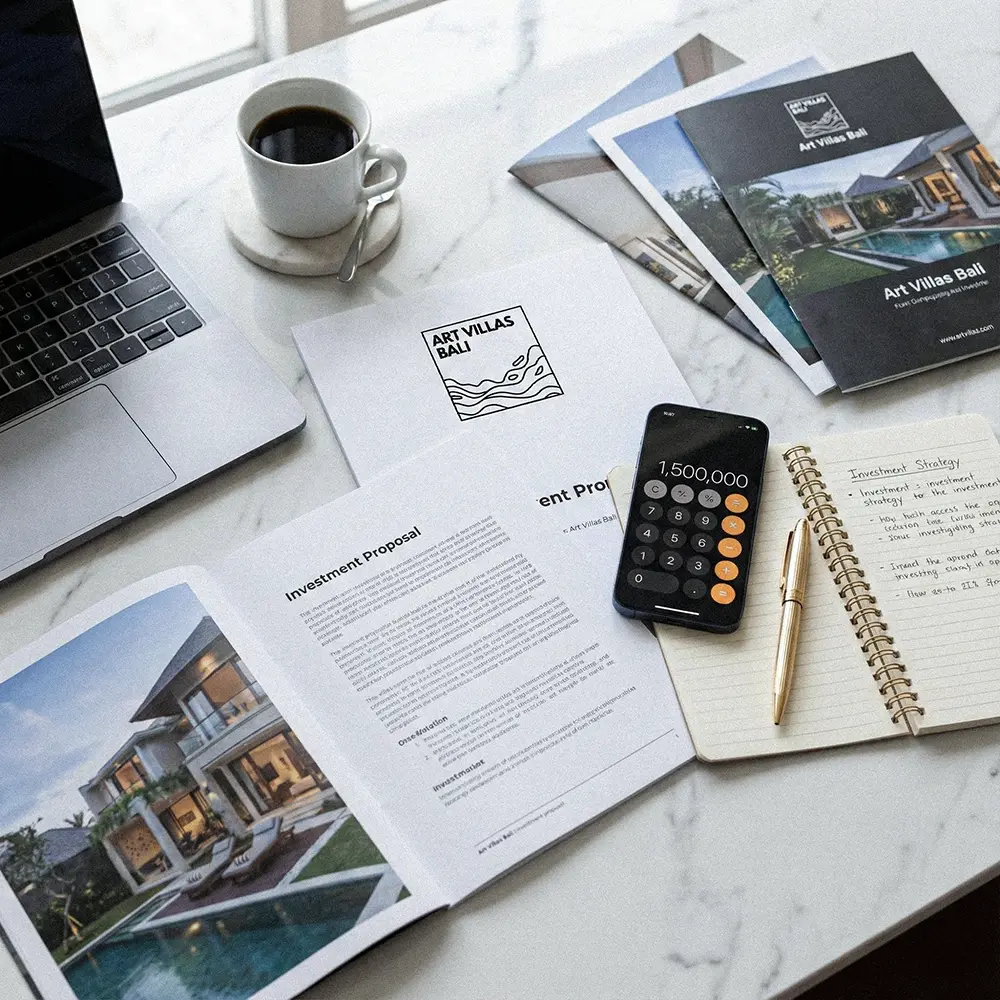
The ROI of Smart Design Decisions
Let’s quantify how these design strategies impact actual rental performance:
Standard villa built without rental optimization:
– Construction cost: $200,000
– Annual revenue: $28,000 (60% occupancy at $180/night)
– Operating expenses: $16,800
– Net income: $11,200
– ROI: 5.6%
Rental-optimized villa with these 7 design decisions:
– Construction cost: $205,000 (+$5,000 for optimization features)
– Annual revenue: $39,200 (75% occupancy at $200/night, +40%)
– Operating expenses: $19,600
– Net income: $19,600
– ROI: 9.6%
Additional annual net income: $8,400
Payback period on $5,000 additional design investment: 7 months
🎯 Ready to Build a Revenue-Optimized Villa?
We’ve designed 40+ rental villas in Bali specifically engineered for maximum occupancy and revenue. Our approach combines architectural expertise with rental performance data to create properties that don’t just look beautiful – they generate income 30-40% higher than comparable generic designs.
Whether you’re working with your own architect and need design review, or want us to handle the complete design-build process, we ensure every design decision is evaluated for rental performance impact. Pool positioning, bedroom configuration, photo-worthy moments, material durability, storage functionality, and natural ventilation – we optimize everything for the rental market.
Our villa design philosophy is simple: beauty should generate bookings, not maintenance bills. Architectural interest should photograph well, not create operational complexity. And investment in smart design features should pay for itself within the first year through higher occupancy and rates.
Building a villa in Bali for rental income? Start with design decisions that maximize returns, not just aesthetics.
Smart villa design in Bali isn’t about following architectural trends. It’s about understanding what guests actually book, what they rate highly, and what operational features reduce your costs while improving their experience. These seven design decisions consistently deliver 30-40% higher rental income because they’re based on performance data, not design awards.